Do You Have a Troubled Heart?

troubled-heart
Source: https://friarmusings.files.wordpress.com/2014/05/troubled-heart.gif

Do you have a troubled heart? Are you worried–or can I spiritualize it–concerned about what’s happening in the economy of your life right now? I know that I have a troubled heart now and then and it’s so hard to find relief at times. But if there is one thing that I have found, and I believe it’s the right thing, if I turn to Jesus Christ when my heart is troubled, I tend to see my troubles slip away and calmness, a peace that passes all understanding, comes upon me. I turn my attention to what He says in John 14:1-6 which says:

“Do not let your heart be troubled; believe in God, believe also in Me. In My Father’s house are many dwelling places; if it were not so, I would have told you; for I go to prepare a place for you. If I go and prepare a place for you, I will come again and receive you to Myself, that where I am, there you may be also. And you know the way where I am going.” Thomas said to Him, “Lord, we do not know where You are going, how do we know the way?” Jesus said to him, “I am the way, and the truth, and the life; no one comes to the Father but through Me.”

How are these verses supposed to help us calm a troubled heart? Notice first of all how Jesus says we don’t have to have a troubled heart because of who He is. He says very clearly believe in God, believe also in Me. He is equating Himself with God the Father. In other words, because He is of the exact same substance, same essence, He can speak to us and tell us to not have a troubled heart. Now this is not a mere suggestion on His part either. Jesus gives us a command by saying do not let your heart be troubled. There is a decision that we need to make to allow our hearts not to be troubled. But this decision is very exclusive because Jesus says to believe in God, believe also in Me. This means that our decision is to believe Jesus is who He says that He is: Jesus is God–in essence, in substance, holding every perfection that God holds without limitation.

Jesus Christ then says that once we make the decision to believe Him to be God, then we can believe that He is going to have a room for us in that He is preparing. Now it generally takes anywhere from six months to two years to build a house, depending on the size of the house. But He has been preparing our dwelling place for over 2,000 years at this point! Can you imagine what type of place He has prepared for those of us who have believed Him? And then He qualifies His statement by saying that if it were not so, I would have told you. This means that He is speaking the truth to us. He doesn’t lie because He is God and God cannot lie because there is no variation with Him. There’s nothing that He would say that is false or has error. What He says IS and SHALL BE–no ifs, ands, or buts about it, satisfaction guaranteed!

Then He declares I will come again and receive you to Myself. We need to understand that this is both a time of rejoicing and a time of grief. It is a time of grief because when Jesus Christ returns He will be coming in judgment. Now I understand that people don’t like to hear about judgment and that today’s mantra is don’t judge me, you don’t know me! But we need to understand that He knows us perfectly well–even better than we know ourselves! Let’s not be so foolish as to think that we can get away with our sin, whatever sin in which we find ourselves or have done or are doing or will do. There is a wage for sin and that wage is death according to the Scriptures.

But the good news is that Jesus Christ is also coming again and will receive those who have believed Him for who He is! He will come again and when He does, He will receive us unto Himself. What a glorious thought! We will be with Him and He will be with us in physical form. We will see Him in all of His glory, seated at the right hand of the Majesty on high. We will hear the throngs of those who have believed and gone before us singing their praises to the Lamb of God who takes away the sins of the world. We will hear the multitudes of angelic beings who are also praising Him with the saints. It will be a symphony like no other saying, Worthy is the Lamb! You can think of those that you know that have believed Jesus Christ unto salvation who have gone on before, and you can imagine what it is that they are seeing and hearing, can’t you? I can. I think of my twin sister, my grandparents, some friends, fellow church members, and others that I have heard or known who are now gone from here and are present there. The Bible says that to be absent from the body is to be present with the Lord. What glory! What grace! What mercy!

Thomas, however, says that he is unsure about all of this. I like Thomas because he is the person that represents all of us. All of us have wondered about the validity of all that has already been said by Jesus Christ. We all wonder if this is the truth, and if it is, we wonder how we might be held to account for either believing or not believing. Some will even deny the existence of the Lord but that doesn’t change the fact that He is who He is or that He exists. Whether one believes or not, He is.

Now Thomas is not questioning whether or not Jesus Christ is who He claims to be, rather, He is wondering where He is going and the way that He is going. Jesus Christ has already told his disciples that He was going to have to suffer death–a cruel death  upon a Cross. But Thomas apparently hasn’t gotten His message as of yet. Sometimes this is just like us. We hear these things and sometimes they don’t click right away. But there is a time in our lives when our own mortality comes to our minds and we begin to wonder if there is a way for us to live eternally. We want to leave a legacy or continue living. It’s innate because God placed eternity in the heart of every person. The problem is that man has exchanged the truth of God for a lie. Man has worshiped the creation rather than the Creator. This is evident with climate change enthusiasts and secular humanists as a whole. Thomas is revealing us as these people who look everywhere else except to Jesus Christ. We think we know God, but in reality we don’t because we don’t look to where He is nor do we seek Him out.

I’m so glad that Jesus Christ doesn’t leave Thomas–doesn’t leave us–to fend for ourselves when it comes to our eternity. He says very clearly I am the way, and the truth; and the life; no one comes to the Father but through Me. Thomas received his answer. Jesus Christ is the way, the truth, and the life. Notice that He uses a definite article to boot. He’s not merely a way, a truth, a life, but rather, He is the way, the truth, and the life. In other words, He is the only way, the only truth, and the only life that leads us to the Father. I cannot work my way to Him, I cannot have “my truth” or “your truth” or anyone else’s truth. He is truth because He cannot be anything but true in all that He says and does because He is God. Do you believe this? I do! Without any shadow of doubt, I believe Him! He is the only way to Heaven where the saints who have gone before us are. He is the only truth that helps us to understand who He is and how through Him we can go to Heaven. He is the only life that we have so we can not only leave a legacy here, but have everlasting life.

And this is why we don’t have to have a troubled heart today…or any day.

productpicture660x293
Click here for more information on Plexus products and a great home business opportunity!

The Holy Scriptures

9781943539048-1689-baptist-confession-faith-modern-english_580x
Source: https://cdn.shopify.com/s/files/1/2773/2624/products/9781943539048-1689-Baptist-Confession-Faith-Modern-English_580x.jpg?v=1534746000

As I consider the Scriptures from week to week, passages that I am studying for my own edification and for sermon preparation, I tend to think of how important it is to know them. Now I would suspect that there are those that think we don’t have to be “so deep” when it comes to the Scriptures, however, I’m not so sure that we can ever go deep enough! The Scriptures are deeper than anything we can think or imagine. The reason is that it happens to be the Word of God: “For the word of God is living and effective and sharper than any double-edged sword, penetrating as far as the separation of soul and spirit, joints and marrow. It is able to judge the thoughts and intentions of the heart.” (CSB)

This is where we need to consider what we think about the Scriptures and what we think the Scriptures say. Dr. Burk Parsons writes, “While we are certainly entitled to hold our own opinions, we are not entitled to hold to our own versions of truth, for it is impossible for more than one version of the truth to exist.” What he is saying is that “our truths” may not be truth at all–especially if “our truths” contradict the Bible. What we end up doing is conceptualizing what we want or desire to be true. Parsons further writes, “Conceptualism provides people with a way to create their own personally conceived realities of truth so that they can believe whatever they want to believe and deny whatever they choose to deny in accordance with their own concept of truth–even if their own conceived reality has no basis in what is in fact reality.”

The definition of “truth” is “fact or reality.” Jesus said that it is “the truth that sets you free” (John 8:32). So what is “truth”? Is there such a thing as absolute truth? Truth is reality–it is fact. And truth is always truth for all people of all generations past, present, and future. However, it seems that we have conceptualized a different reality that fits our feelings or our own understanding of how the world is working. Proverbs 3:5, 6 says, “Trust in the LORD with all your heart, and do not rely on your own understanding; in all your ways know Him, and He will make your paths straight.” (CSB) Solomon knew what he was speaking about. After experiencing so many different things that he thought would bring him joy in this life (read Ecclesiastes), he came to realize that the only true way to live is not according to our own understanding, but according to what it is that God knows, understands, and gives by way of wisdom. And where do we find what God thinks? In His Word! His Word has the answer.

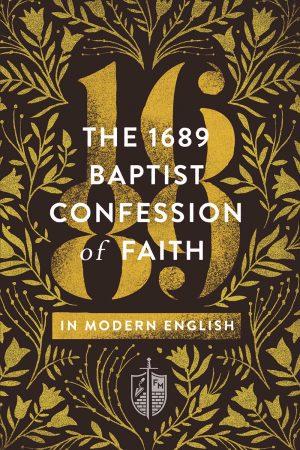
So as I am considering the 1689 Baptist Confession of Faith, Chapter 1 deals with “The Holy Scriptures.” Here’s what it states:

1. The Holy Scriptures are the only sufficient, certain, and infallible standard of all saving knowledge, faith, and obedience.1  The light of nature and the works of creation and providence so clearly demonstrate the goodness, wisdom, and power of God that people are left without excuse; however, these demonstrations are not sufficient to give the knowledge of God and his will that is necessary for salvation.2 Therefore, the Lord was pleased at different times and in various ways to reveal himself and to declare his will to his church.3  To preserve and propagate the truth better and to establish and comfort the church with greater certainty against the corruption of the flesh and the malice of Satan and the world, the Lord put this revelation completely in writing. Therefore, the Holy Scriptures are absolutely necessary, because God’s former ways of revealing his will to his people have now ceased.4

12 Timothy 3:15–17; Isaiah 8:20; Luke 16:29, 31; Ephesians 2:20. 2Romans 1:19–21; Romans 2:14,15; Psalm 19:1–3. 3Hebrews 1:1. 4Proverbs 22:19–21; Romans 15:4; 2 Peter 1:19, 20.

2. The Holy Scriptures, or the Word of God written, consist of all the books of the Old and New Testaments. These are:

THE OLD TESTAMENT: Genesis, Exodus, Leviticus, Numbers, Deuteronomy, Joshua, Judges, Ruth, 1 Samuel, 2 Samuel, 1 Kings, 2 Kings, 1 Chronicles, 2 Chronicles, Ezra, Nehemiah, Esther, Job, Psalms, Proverbs, Ecclesiastes, Song of Solomon, Isaiah, Jeremiah, Lamentations, Ezekiel, Daniel, Hosea, Joel, Amos, Obadiah, Jonah, Micah, Nahum, Habakkuk, Zephaniah, Haggai, Zechariah, Malachi.

THE NEW TESTAMENT: Matthew, Mark, Luke, John, Acts, Romans, 1 Corinthians, 2 Corinthians, Galatians, Ephesians, Philippians, Colossians, 1 Thessalonians, 2 Thessalonians, 1 Timothy, 2 Timothy, Titus, Philemon, Hebrews, James, 1 Peter, 2 Peter, 1 John, 2 John, 3 John, Jude, Revelation.

All of these are given by the inspiration of God to be the standard of faith and life.5

52 Timothy 3:16.

3. The books commonly called the Apocrypha were not given by divine inspiration and so are not part of the canon or standard of the Scriptures. Therefore, they have no authority for the church of God and are not to be recognized or used in any way different from other human writings.6

6Luke 24:27, 44; Romans 3:2.

4. The authority of the Holy Scriptures obligates belief in them. This authority does not depend on the testimony of any person or church but on God the author alone, who is truth itself. Therefore, the Scriptures are to be received because they are the Word of God.7

72 Peter 1:19–21; 2 Timothy 3:16; 1 Thessalonians 2:13; 1 John 5:9.

5. The testimony of the church of God may stir and persuade us to adopt a high and reverent respect for the Holy Scriptures. Moreover, the heavenliness of the contents, the power of the system of truth, the majesty of the style, the harmony of all the parts, the central focus on giving all glory to God, the full revelation of the only way of salvation, and many other incomparable qualities and complete perfections, all provide abundant evidence that the Scriptures are the Word of God. Even so, our full persuasion and assurance of the infallible truth and divine authority of the Scriptures comes from the internal work of the Holy Spirit bearing witness by and with the Word in our hearts.8

8John 16:13,14; 1 Corinthians 2:10–12; 1 John 2:20, 27.

6. The whole counsel of God concerning everything essential for his own glory and man’s salvation, faith, and life is either explicitly stated or by necessary inference contained in the Holy Scriptures. Nothing is ever to be added to the Scriptures, either by new revelation of the Spirit or by human traditions.9

Nevertheless, we acknowledge that the inward illumination of the Spirit of God is necessary for a saving understanding of what is revealed in the Word.10 We recognize that some circumstances concerning the worship of God and government of the church are common to human actions and organizations and are to be ordered by the light of nature and Christian wisdom, following the general rules of the Word, which must always be observed.11

92 Timothy 3:15–17; Galatians 1:8,9. 10John 6:45; 1 Corinthians 2:9–12. 111 Corinthians 11:13, 14; 1 Corinthians 14:26, 40.

7. Some things in Scripture are clearer than others, and some people understand the teachings more clearly than others.12   However, the things that must be known, believed, and obeyed for salvation are so clearly set forth and explained in one part of Scripture or another that both the educated and uneducated may achieve a sufficient understanding of them by properly using ordinary measures.13

122 Peter 3:16. 13Psalm 19:7; Psalm 119:130.

8. The Old Testament was written in Hebrew, the native language of the ancient people of God.14  The New Testament was written in Greek, which at the time it was written was most widely known to the nations. These Testaments were inspired directly by God and by his unique care and providence were kept pure down through the ages. They are therefore true and authoritativea, so that in all religious controversies the church must make their ultimate appeal to them.15 All God’s people have a right to and a claim on the Scriptures and are commanded in the fear of God to read16 and search them.17  Not all of God’s people know these original languages, so the Scriptures are to be translated into the common language of every nation to which they come.18  In this way the Word of God may dwell richly in all, so that they may worship him in an acceptable manner and through patience and the comfort of the Scriptures may have hope.19

aauthentical
14Romans 3:2. 15Isaiah 8:20. 16Acts 15:15. 17John 5:39. 181 Corinthians 14:6, 9, 11, 12, 24, 28. 19Colossians 3:16.

9. The infallible rule for interpreting Scripture is the Scripture itself. Therefore, when there is a question about the true and full meaningc of any part of Scripture (and each passage has only one meaning, not many), it must be understood in light of other passages that speak more clearly.20

csense
202 Peter 1:20, 21; Acts 15:15, 16.

10. The supreme judge for deciding all religious controversies and for evaluating all decrees of councils, opinions of ancient writers, human teachings, and individual interpretationsd, and in whose judgment we are to rest, is nothing but the Holy Scripture delivered by the Spirit. In this Scripture our faith finds its final word.21

dprivate spirits
21Matthew 22:29, 31, 32; Ephesians 2:20; Acts 28:23.

The Holy Scriptures are holy because they come from the One and True Holy God. The Holy Scriptures reveal God’s thoughts. The Holy Scriptures reveal God’s understanding. The Holy Scriptures reveal God’s wisdom. Simply put: The Holy Scriptures reveal TRUTH–ABSOLUTE TRUTH because the opposite of our Holy God is error/falsity/lies/non-truth. He can only speak that which is true and only true.

Now let’s consider what He says, dig deeper into His Word this week, and see where our thoughts are not His thoughts and change our thoughts to fit His thoughts. Let’s do what we can to understand how He thinks so our concepts will not be our own, but will truly be a concept of reality/fact/truth.

productpicture660x293
Click here for more information on Plexus products and a great home business opportunity!

God and the Holy Trinity

9781943539048-1689-baptist-confession-faith-modern-english_580x
Source: https://cdn.shopify.com/s/files/1/2773/2624/products/9781943539048-1689-Baptist-Confession-Faith-Modern-English_580x.jpg?v=1534746000

I am reading over the The 1689 Baptist Confession of Faith In Modern English (accessed from https://founders.org/library/1689-confession/, on November 25, 2019) which historically was held by the 293 delegates that constituted our Southern Baptist Convention in Augusta,Georgia in 1845. The section that I am reviewing this afternoon is the second chapter entitled God and the Holy Trinity. This is what it states with Scriptural references:

1. The Lord our God is one, the only living and true God.1  He is self-existent2 and infinite in being and perfection. His essence cannot be understood by anyone but him.3  He is a perfectly pure spirit.4  He is invisible and has no body, parts, or changeable emotions.a He alone has immortality, dwelling in light that no one can approach.5  He is unchangeable,6immense,b,7 eternal,8 incomprehensible, almighty,9 in every way infinite, absolutely holy,10 perfectly wise, wholly free, completely absolute. He works all things according to the counsel of his own unchangeable and completely righteous will11 for his own glory.12  He is most loving, gracious, merciful, and patient. He overflows with goodness and truth, forgiving iniquity, transgression, and sin. He rewards those who seek him diligently.13  At the same time, he is perfectly just and terrifying in his judgments.14  He hates all sin15 and will certainly not clear the guilty.16

apassions
btranscends all space
11 Corinthians 8:4, 6; Deuteronomy 6:4. 2Jeremiah 10:10; Isaiah 48:12. 3Exodus 3:14. 4John 4:24. 51 Timothy 1:17; Deuteronomy 4:15, 16. 6Malachi 3:6. 71 Kings 8:27; Jeremiah 23:23. 8Psalm 90:2. 9Genesis 17:1. 10Isaiah 6:3. 11Psalm 115:3; Isaiah 46:10. 12Proverbs 16:4; Romans 11:36. 13Exodus 34:6, 7; Hebrews 11:6. 14Nehemiah 9:32, 33. 15Psalm 5:5, 6. 16Exodus 34:7; Nahum 1:2, 3.

2. God has all life,17 glory,18 goodness,19 and blessedness in and of himself; he alone is all-sufficient in himself. He does not need any creature he has made nor does he derive any glory from them.20  Instead, he demonstrates his own glory in them, by them, to them, and upon them. He alone is the source of all being, and everything is from him, through him, and to him.21  He has absolute sovereign rule over all creatures, to act through them, for them, or upon them as he pleases.22  In his sight everything is open and visible.23  His knowledge is infinite and infallible. It does not depend upon any creature, so for him nothing is contingent or uncertain.24  He is absolutely holy in all his plans, in all his works,25 and in all his commands. Angels and human beings owe to him all the worship,26 service, or obedience that creatures owe to the Creator and whatever else he is pleased to require of them.

17John 5:26. 18Psalm 148:13. 19Psalm 119:68. 20Job 22:2, 3. 21Romans 11:34–36. 22Daniel 4:25, 34, 35. 23Hebrews 4:13. 24Ezekiel 11:5; Acts 15:18. 25Psalm 145:17. 26Revelation 5:12–14.

3. This divine and infinite Being consists of three real persons,c the Father, the Word or Son, and the Holy Spirit.27  These three have the same substance, power, and eternity, each having the whole divine essence without this essence being divided.28  The Father is not derived from anyone, neither begotten nor proceeding. The Son is eternally begotten of the Father.29  The Holy Spirit proceeds from the Father and the Son.30  All three are infinite and without beginning and are therefore only one God, who is not to be divided in nature and being. Yet these three are distinguished by several distinctive characteristics and personal relations. This truth of the Trinity is the foundation of all of our fellowship with God and of our comforting dependence on him.

csubsistences, or individual instances of a given essence
271 John 5:7; Matthew 28:19; 2 Corinthians 13:14. 28Exodus 3:14; John 14:11; 1 Corinthians 8:6. 29John 1:14,18. 30John 15:26; Galatians 4:6.

The God of the Bible whom we believe truly is magnanimous, or as A.W. Tozer once said, “He is oceanic!” Although He is transcendant and something totally different than all of us, He has made Himself known to us through several different avenues: 1) He has given us His name; 2) He has given us language; 3) He has given us His Word; 4) He has given us the Second Person of the Trinity, Jesus Christ, as our Lord and Savior; and, 5) He has given us His Holy Spirit. Dear Ones, I don’t know about you, but I am so grateful that God has made Himself known to us in the way that He has. We may not fully comprehend Him or fully comprehend His Word, but He is who He is and He has made Himself known to those who beleive. And although He has made Himself known, Romans 1:18-32 and 3:10-18 describe those who do not know Him. They have exchanged the truth of the existence of God for a lie and they worship the creation rather than the Creator. They are all unrighteous as we are but they don’t seek after God nor do they understand Him. And according to 1 Corinthians 1:18-24, what is foolishness to those who are perishing is the wisdom of God to those of us who beleive. I cannot help but praise the One who loved me before I ever loved Him (1 John 4:19)!

Today, although I am uncertain of the future, I am praising the One who is certain of all that He is, all that He has decreed, and all that He intends to accomplish in my life, my wife, my children, and Sagamore Baptist Church. Let’s love Him, adore Him, praise Him, and bless Him together!

plexus-slim-1
http://www.shopmyplexus.com/cherylgorena