President William J. Clinton’s First Inaugural Address, January 20, 1993*

918px-bill_clinton
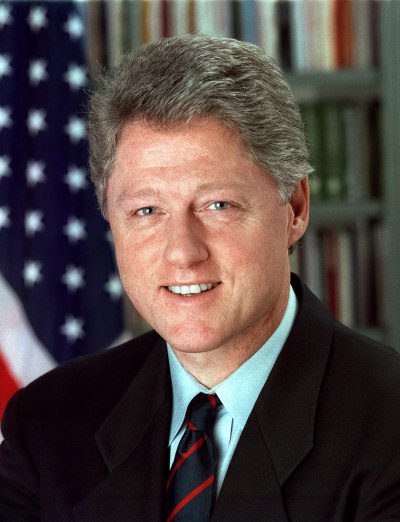
President William J. Clinton, 42nd President of the United States of America, 1993-2001. Source: https://upload.wikimedia.org/wikipedia/commons/thumb/d/d3/Bill_Clinton.jpg/918px-Bill_Clinton.jpg

My fellow citizens, today we celebrate the mystery of American renewal. This ceremony is held in the depth of winter, but by the words we speak and the faces we show the world, we force the spring, a spring reborn in the world’s oldest democracy that brings forth the vision and courage to reinvent America. When our Founders boldly declared America’s independence to the world and our purposes to the Almighty, they knew that America, to endure, would have to change; not change for change’s sake but change to preserve America’s ideals: life, liberty, the pursuit of happiness. Though we marched to the music of our time, our mission is timeless. Each generation of Americans must define what it means to be an American.

On behalf of our Nation, I salute my predecessor, President Bush, for his half-century of service to America. And I thank the millions of men and women whose steadfastness and sacrifice triumphed over depression, fascism, and communism.

Today, a generation raised in the shadows of the cold war assumes new responsibilities in a world warmed by the sunshine of freedom but threatened still by ancient hatreds and new plagues. Raised in unrivaled prosperity, we inherit an economy that is still the world’s strongest but is weakened by business failures, stagnant wages, increasing inequality, and deep divisions among our own people.

When George Washington first took the oath I have just sworn to uphold, news traveled slowly across the land by horseback and across the ocean by boat. Now, the sights and sounds of this ceremony are broadcast instantaneously to billions around the world. Communications and commerce are global. Investment is mobile. Technology is almost magical. And ambition for a better life is now universal.

We earn our livelihood in America today in peaceful competition with people all across the Earth. Profound and powerful forces are shaking and remaking our world. And the urgent question of our time is whether we can make change our friend and not our enemy. This new world has already enriched the lives of millions of Americans who are able to compete and win in it. But when most people are working harder for less; when others cannot work at all; when the cost of health care devastates families and threatens to bankrupt our enterprises, great and small; when the fear of crime robs law-abiding citizens of their freedom; and when millions of poor children cannot even imagine the lives we are calling them to lead, we have not made change our friend.

We know we have to face hard truths and take strong steps, but we have not done so; instead, we have drifted. And that drifting has eroded our resources, fractured our economy, and shaken our confidence. Though our challenges are fearsome, so are our strengths. Americans have ever been a restless, questing, hopeful people. And we must bring to our task today the vision and will of those who came before us. From our Revolution to the Civil War, to the Great Depression, to the civil rights movement, our people have always mustered the determination to construct from these crises the pillars of our history. Thomas Jefferson believed that to preserve the very foundations of our Nation, we would need dramatic change from time to time. Well, my fellow Americans, this is our time. Let us embrace it.

Our democracy must be not only the envy of the world but the engine of our own renewal. There is nothing wrong with America that cannot be cured by what is right with America. And so today we pledge an end to the era of deadlock and drift, and a new season of American renewal has begun.

To renew America, we must be bold. We must do what no generation has had to do before. We must invest more in our own people, in their jobs, and in their future, and at the same time cut our massive debt. And we must do so in a world in which we must compete for every opportunity. It will not be easy. It will require sacrifice, but it can be done and done fairly, not choosing sacrifice for its own sake but for our own sake. We must provide for our Nation the way a family provides for its children.

Our Founders saw themselves in the light of posterity. We can do no less. Anyone who has ever watched a child’s eyes wander into sleep knows what posterity is. Posterity is the world to come: the world for whom we hold our ideals, from whom we have borrowed our planet, and to whom we bear sacred responsibility. We must do what America does best: offer more opportunity to all and demand more responsibility from all. It is time to break the bad habit of expecting something for nothing from our Government or from each other. Let us all take more responsibility not only for ourselves and our families but for our communities and our country.

To renew America, we must revitalize our democracy. This beautiful Capital, like every capital since the dawn of civilization, is often a place of intrigue and calculation. Powerful people maneuver for position and worry endlessly about who is in and who is out, who is up and who is down, forgetting those people whose toil and sweat sends us here and pays our way. Americans deserve better. And in this city today there are people who want to do better. And so I say to all of you here: Let us resolve to reform our politics so that power and privilege no longer shout down the voice of the people. Let us put aside personal advantage so that we can feel the pain and see the promise of America. Let us resolve to make our Government a place for what Franklin Roosevelt called bold, persistent experimentation, a Government for our tomorrows, not our yesterdays. Let us give this Capital back to the people to whom it belongs.

To renew America, we must meet challenges abroad as well as at home. There is no longer a clear division between what is foreign and what is domestic. The world economy, the world environment, the world AIDS crisis, the world arms race: they affect us all. Today, as an older order passes, the new world is more free but less stable. Communism’s collapse has called forth old animosities and new dangers. Clearly, America must continue to lead the world we did so much to make.

While America rebuilds at home, we will not shrink from the challenges nor fail to seize the opportunities of this new world. Together with our friends and allies, we will work to shape change, lest it engulf us. When our vital interests are challenged or the will and conscience of the international community is defied, we will act, with peaceful diplomacy whenever possible, with force when necessary. The brave Americans serving our Nation today in the Persian Gulf, in Somalia, and wherever else they stand are testament to our resolve. But our greatest strength is the power of our ideas, which are still new in many lands. Across the world we see them embraced, and we rejoice. Our hopes, our hearts, our hands are with those on every continent who are building democracy and freedom. Their cause is America’s cause.

The American people have summoned the change we celebrate today. You have raised your voices in an unmistakable chorus. You have cast your votes in historic numbers. And you have changed the face of Congress, the Presidency, and the political process itself. Yes, you, my fellow Americans, have forced the spring. Now we must do the work the season demands. To that work I now turn with all the authority of my office. I ask the Congress to join with me. But no President, no Congress, no Government can undertake this mission alone.

My fellow Americans, you, too, must play your part in our renewal. I challenge a new generation of young Americans to a season of service: to act on your idealism by helping troubled children, keeping company with those in need, reconnecting our torn communities. There is so much to be done; enough, indeed, for millions of others who are still young in spirit to give of themselves in service, too. In serving, we recognize a simple but powerful truth: We need each other, and we must care for one another.

Today we do more than celebrate America. We rededicate ourselves to the very idea of America, an idea born in revolution and renewed through two centuries of challenge; an idea tempered by the knowledge that, but for fate, we, the fortunate, and the unfortunate might have been each other; an idea ennobled by the faith that our Nation can summon from its myriad diversity the deepest measure of unity; an idea infused with the conviction that America’s long, heroic journey must go forever upward.

And so, my fellow Americans, as we stand at the edge of the 21st century, let us begin anew with energy and hope, with faith and discipline. And let us work until our work is done. The Scripture says, “And let us not be weary in well doing: for in due season we shall reap, if we faint not.” From this joyful mountaintop of celebration we hear a call to service in the valley. We have heard the trumpets. We have changed the guard. And now, each in our own way and with God’s help, we must answer the call.

Thank you, and God bless you all.

William J. Clinton: “Inaugural Address,” January 20, 1993. Online by Gerhard Peters and John T. Woolley, The American Presidency Project. http://www.presidency.ucsb.edu/ws/?pid=46366.

President George H.W. Bush’s Inaugural Address, January 20, 1989*

george_h-_w-_bush2c_president_of_the_united_states2c_1989_official_portrait
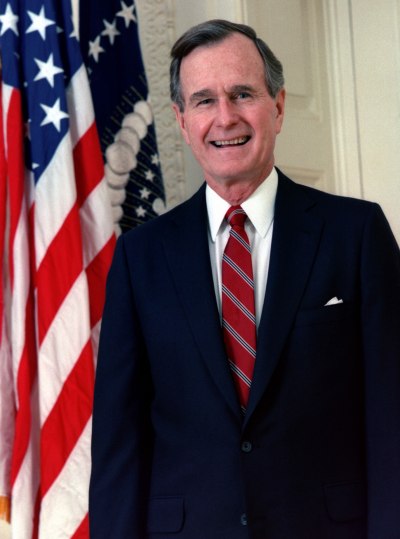
President George H.W. Bush, 41st President of the United States of America, 1989-1993. Source: https://upload.wikimedia.org/wikipedia/commons/0/0f/George_H._W._Bush%2C_President_of_the_United_States%2C_1989_official_portrait.jpg

Mr. Chief Justice, Mr. President, Vice President Quayle, Senator Mitchell, Speaker Wright, Senator Dole, Congressman Michel, and fellow citizens, neighbors, and friends:

There is a man here who has earned a lasting place in our hearts and in our history. President Reagan, on behalf of our nation, I thank you for the wonderful things that you have done for America.

I’ve just repeated word for word the oath taken by George Washington 200 years ago, and the Bible on which I placed my hand is the Bible on which he placed his. It is right that the memory of Washington be with us today not only because this is our bicentennial inauguration but because Washington remains the Father of our Country. And he would, I think, be gladdened by this day; for today is the concrete expression of a stunning fact: our continuity, these 200 years, since our government began.

We meet on democracy’s front porch. A good place to talk as neighbors and as friends. For this is a day when our nation is made whole, when our differences, for a moment, are suspended. And my first act as President is a prayer. I ask you to bow your heads.

Heavenly Father, we bow our heads and thank You for Your love. Accept our thanks for the peace that yields this day and the shared faith that makes its continuance likely. Make us strong to do Your work, willing to heed and hear Your will, and write on our hearts these words: “Use power to help people.” For we are given power not to advance our own purposes, nor to make a great show in the world, nor a name. There is but one just use of power, and it is to serve people. Help us remember, Lord. Amen.

I come before you and assume the Presidency at a moment rich with promise. We live in a peaceful, prosperous time, but we can make it better. For a new breeze is blowing, and a world refreshed by freedom seems reborn. For in man’s heart, if not in fact, the day of the dictator is over. The totalitarian era is passing, its old ideas blown away like leaves from an ancient, lifeless tree. A new breeze is blowing, and a nation refreshed by freedom stands ready to push on. There is new ground to be broken and new action to be taken. There are times when the future seems thick as a fog; you sit and wait, hoping the mists will lift and reveal the right path. But this is a time when the future seems a door you can walk right through into a room called tomorrow.

Great nations of the world are moving toward democracy through the door to freedom. Men and women of the world move toward free markets through the door to prosperity. The people of the world agitate for free expression and free thought through the door to the moral and intellectual satisfactions that only liberty allows.

We know what works: Freedom works. We know what’s right: Freedom is right. We know how to secure a more just and prosperous life for man on Earth: through free markets, free speech, free elections, and the exercise of free will unhampered by the state.

For the first time in this century, for the first time in perhaps all history, man does not have to invent a system by which to live. We don’t have to talk late into the night about which form of government is better. We don’t have to wrest justice from the kings. We only have to summon it from within ourselves. We must act on what we know. I take as my guide the hope of a saint: In crucial things, unity; in important things, diversity; in all things, generosity.

America today is a proud, free nation, decent and civil, a place we cannot help but love. We know in our hearts, not loudly and proudly but as a simple fact, that this country has meaning beyond what we see, and that our strength is a force for good. But have we changed as a nation even in our time? Are we enthralled with material things, less appreciative of the nobility of work and sacrifice?

My friends, we are not the sum of our possessions. They are not the measure of our lives. In our hearts we know what matters. We cannot hope only to leave our children a bigger car, a bigger bank account. We must hope to give them a sense of what it means to be a loyal friend; a loving parent; a citizen who leaves his home, his neighborhood, and town better than he found it. And what do we want the men and women who work with us to say when we’re no longer there? That we were more driven to succeed than anyone around us? Or that we stopped to ask if a sick child had gotten better and stayed a moment there to trade a word of friendship?

No President, no government can teach us to remember what is best in what we are. But if the man you have chosen to lead this government can help make a difference; if he can celebrate the quieter, deeper successes that are made not of gold and silk but of better hearts and finer souls; if he can do these things, then he must.

America is never wholly herself unless she is engaged in high moral principle. We as a people have such a purpose today. It is to make kinder the face of the Nation and gentler the face of the world. My friends, we have work to do. There are the homeless, lost and roaming. There are the children who have nothing, no love and no normalcy. There are those who cannot free themselves of enslavement to whatever addiction — drugs, welfare, the demoralization that rules the slums. There is crime to be conquered, the rough crime of the streets. There are young women to be helped who are about to become mothers of children they can’t care for and might not love. They need our care, our guidance, and our education, though we bless them for choosing life.

The old solution, the old way, was to think that public money alone could end these problems. But we have learned that that is not so. And in any case, our funds are low. We have a deficit to bring down. We have more will than wallet, but will is what we need. We will make the hard choices, looking at what we have and perhaps allocating it differently, making our decisions based on honest need and prudent safety. And then we will do the wisest thing of all. We will turn to the only resource we have that in times of need always grows: the goodness and the courage of the American people.

And I am speaking of a new engagement in the lives of others, a new activism, hands-on and involved, that gets the job done. We must bring in the generations, harnessing the unused talent of the elderly and the unfocused energy of the young. For not only leadership is passed from generation to generation but so is stewardship. And the generation born after the Second World War has come of age.

I have spoken of a Thousand Points of Light, of all the community organizations that are spread like stars throughout the Nation, doing good. We will work hand in hand, encouraging, sometimes leading, sometimes being led, rewarding. We will work on this in the White House, in the Cabinet agencies. I will go to the people and the programs that are the brighter points of light, and I’ll ask every member of my government to become involved. The old ideas are new again because they’re not old, they are timeless: duty, sacrifice, commitment, and a patriotism that finds its expression in taking part and pitching in.

We need a new engagement, too, between the Executive and the Congress. The challenges before us will be thrashed out with the House and the Senate. And we must bring the Federal budget into balance. And we must ensure that America stands before the world united, strong, at peace, and fiscally sound. But of course things may be difficult. We need to compromise; we’ve had dissension. We need harmony; we’ve had a chorus of discordant voices.

For Congress, too, has changed in our time. There has grown a certain divisiveness. We have seen the hard looks and heard the statements in which not each other’s ideas are challenged but each other’s motives. And our great parties have too often been far apart and untrusting of each other. It’s been this way since Vietnam. That war cleaves us still. But, friends, that war began in earnest a quarter of a century ago, and surely the statute of limitation has been reached. This is a fact: The final lesson of Vietnam is that no great nation can long afford to be sundered by a memory. A new breeze is blowing, and the old bipartisanship must be made new again.

To my friends, and, yes, I do mean friends — in the loyal opposition and, yes, I mean loyal — I put out my hand. I am putting out my hand to you, Mr. Speaker. I am putting out my hand to you, Mr. Majority Leader. For this is the thing: This is the age of the offered hand. And we can’t turn back clocks, and I don’t want to. But when our fathers were young, Mr. Speaker, our differences ended at the water’s edge. And we don’t wish to turn back time, but when our mothers were young, Mr. Majority Leader, the Congress and the Executive were capable of working together to produce a budget on which this nation could live. Let us negotiate soon and hard. But in the end, let us produce. The American people await action. They didn’t send us here to bicker. They ask us to rise above the merely partisan. “In crucial things, unity” — and this, my friends, is crucial.

To the world, too, we offer new engagement and a renewed vow: We will stay strong to protect the peace. The offered hand is a reluctant fist; once made — strong, and can be used with great effect. There are today Americans who are held against their will in foreign lands and Americans who are unaccounted for. Assistance can be shown here and will be long remembered. Good will begets good will. Good faith can be a spiral that endlessly moves on.

Great nations like great men must keep their word. When America says something, America means it, whether a treaty or an agreement or a vow made on marble steps. We will always try to speak clearly, for candor is a compliment; but subtlety, too, is good and has its place. While keeping our alliances and friendships around the world strong, ever strong, we will continue the new closeness with the Soviet Union, consistent both with our security and with progress. One might say that our new relationship in part reflects the triumph of hope and strength over experience. But hope is good, and so is strength and vigilance.

Here today are tens of thousands of our citizens who feel the understandable satisfaction of those who have taken part in democracy and seen their hopes fulfilled. But my thoughts have been turning the past few days to those who would be watching at home, to an older fellow who will throw a salute by himself when the flag goes by and the woman who will tell her sons the words of the battle hymns. I don’t mean this to be sentimental. I mean that on days like this we remember that we are all part of a continuum, inescapably connected by the ties that bind.

Our children are watching in schools throughout our great land. And to them I say, Thank you for watching democracy’s big day. For democracy belongs to us all, and freedom is like a beautiful kite that can go higher and higher with the breeze. And to all I say, No matter what your circumstances or where you are, you are part of this day, you are part of the life of our great nation.

A President is neither prince nor pope, and I don’t seek a window on men’s souls. In fact, I yearn for a greater tolerance, and easygoingness about each other’s attitudes and way of life.

There are few clear areas in which we as a society must rise up united and express our intolerance. The most obvious now is drugs. And when that first cocaine was smuggled in on a ship, it may as well have been a deadly bacteria, so much has it hurt the body, the soul of our country. And there is much to be done and to be said, but take my word for it: This scourge will stop!

And so, there is much to do. And tomorrow the work begins. And I do not mistrust the future. I do not fear what is ahead. For our problems are large, but our heart is larger. Our challenges are great, but our will is greater. And if our flaws are endless, God’s love is truly boundless.

Some see leadership as high drama and the sound of trumpets calling, and sometimes it is that. But I see history as a book with many pages, and each day we fill a page with acts of hopefulness and meaning. The new breeze blows, a page turns, the story unfolds. And so, today a chapter begins, a small and stately story of unity, diversity, and generosity — shared, and written, together.

Thank you. God bless you. And God bless the United States of America.

George Bush: “Inaugural Address,” January 20, 1989. Online by Gerhard Peters and John T. Woolley, The American Presidency Project. http://www.presidency.ucsb.edu/ws/?pid=16610.

President Ronald W. Reagan’s Second Inaugural Address, January 21, 1985*

1453920300931
President Ronald W. Reagan, 40th President of the United States of America, 1981-1989. Source: https://img.fireden.net/v/image/1453/92/1453920300931.jpg

Senator Mathias, Chief Justice Burger, Vice President Bush, Speaker O’Neill, Senator Dole, reverend clergy, and members of my family and friends and my fellow citizens:

This day has been made brighter with the presence here of one who, for a time, has been absent. Senator John Stennis, God bless you and welcome back.

There is, however, one who is not with us today. Representative Gillis Long of Louisiana left us last night. And I wonder if we could all join in a moment of silent prayer.

[The President resumed speaking after a moment of silence. ]

Amen.

There are no words adequate to express my thanks for the great honor that you’ve bestowed on me. I’ll do my utmost to be deserving of your trust.

This is, as Senator Mathias told us, the 50th time that we, the people, have celebrated this historic occasion. When the first President, George Washington, placed his hand upon the Bible, he stood less than a single day’s journey by horseback from raw, untamed wilderness. There were 4 million Americans in a union of 13 States. Today, we are 60 times as many in a union of 50 States. We’ve lighted the world with our inventions, gone to the aid of mankind wherever in the world there was a cry for help, journeyed to the Moon and safely returned. So much has changed, and yet we stand together as we did two centuries ago.

When I took this oath 4 years ago, I did so in a time of economic stress. Voices were raised saying that we had to look to our past for the greatness and glory. But we, the present-day Americans, are not given to looking backward. In this blessed land, there is always a better tomorrow.

Four years ago, I spoke to you of a New Beginning, and we have accomplished that. But in another sense, our New Beginning is a continuation of that beginning created two centuries ago when, for the first time in history, government, the people said, was not our master, it is our servant; its only power that which we the people allow it to have.

That system has never failed us, but for a time we failed the system. We asked things of government that government was not equipped to give. We yielded authority to the National Government that properly belonged to States or to local governments or to the people themselves. We allowed taxes and inflation to rob us of our earnings and savings and watched the great industrial machine that had made us the most productive people on Earth slow down and the number of unemployed increase.

By 1980 we knew it was time to renew our faith, to strive with all our strength toward the ultimate in individual freedom, consistent with an orderly society.

We believed then and now: There are no limits to growth and human progress when men and women are free to follow their dreams. And we were right to believe that. Tax rates have been reduced, inflation cut dramatically, and more people are employed than ever before in our history.

We are creating a nation once again vibrant, robust, and alive. But there are many mountains yet to climb. We will not rest until every American enjoys the fullness of freedom, dignity, and opportunity as our birthright. It is our birthright as citizens of this great Republic.

And if we meet this challenge, these will be years when Americans have restored their confidence and tradition of progress; when our values of faith, family, work, and neighborhood were restated for a modern age; when our economy was finally freed from government’s grip; when we made sincere efforts at meaningful arms reductions and by rebuilding our defenses, our economy, and developing new technologies, helped preserve peace in a troubled world; when America courageously supported the struggle for individual liberty, self-government, and free enterprise throughout the world and turned the tide of history away from totalitarian darkness and into the warm sunlight of human freedom.

My fellow citizens, our nation is poised for greatness. We must do what we know is right, and do it with all our might. Let history say of us: “These were golden years-when the American Revolution was reborn, when freedom gained new life, and America reached for her best.

Our two-party system has solved us-served us, I should say, well over the years, but never better than in those times of great challenge when we came together not as Democrats or Republicans, but as Americans united in a common cause.

Two of our Founding Fathers, a Boston lawyer named Adams and a Virginia planter named Jefferson, members of that remarkable group who met in Independence Hall and dared to think they could start the world over again, left us an important lesson. They had become, in the years then in government, bitter political rivals in the Presidential election of 1800. Then, years later, when both were retired and age had softened their anger, they began to speak to each other again through letters. A bond was reestablished between those two who had helped create this government of ours.

In 1826, the 50th anniversary of the Declaration of Independence, they both died. They died on the same day, within a few hours of each other, and that day was the Fourth of July.

In one of those letters exchanged in the sunset of their lives, Jefferson wrote: “It carries me back to the times when, beset with difficulties and dangers, we were fellow laborers in the same cause, struggling for what is most valuable to man, his right of self-government. Laboring always at the same oar, with some wave ever ahead threatening to overwhelm us, and yet passing harmless… we rode through the storm with heart and hand.”

Well, with heart and hand let us stand as one today—one people under God, determined that our future shall be worthy of our past. As we do, we must not repeat the well-intentioned errors of our past. We must never again abuse the trust of working men and women by sending their earnings on a futile chase after the spiraling demands of a bloated Federal Establishment. You elected us in 1980 to end this prescription for disaster, and I don’t believe you reelected us in 1984 to reverse course.

At the heart of our efforts is one idea vindicated by 25 straight months of economic growth: Freedom and incentives unleash the drive and entrepreneurial genius that are the core of human progress. We have begun to increase the rewards for work, savings, and investment; reduce the increase in the cost and size of government and its interference in people’s lives.

We must simplify our tax system, make it more fair and bring the rates down for all who work and earn. We must think anew and move with a new boldness, so every American who seeks work can find work, so the least among us shall have an equal chance to achieve the greatest things—to be heroes who heal our sick, feed the hungry, protect peace among nations, and leave this world a better place.

The time has come for a new American emancipation—a great national drive to tear down economic barriers and liberate the spirit of enterprise in the most distressed areas of our country. My friends, together we can do this, and do it we must, so help me God.

From new freedom will spring new opportunities for growth, a more productive, fulfilled, and united people, and a stronger America—an America that will lead the technological revolution and also open its mind and heart and soul to the treasures of literature, music, and poetry, and the values of faith, courage, and love.

A dynamic economy, with more citizens working and paying taxes, will be our strongest tool to bring down budget deficits. But an almost unbroken 50 years of deficit spending has finally brought us to a time of reckoning. We’ve come to a turning point, a moment for hard decisions. I have asked the Cabinet and my staff a question and now I put the same question to all of you. If not us, who? And if not now, when? It must be done by all of us going forward with a program aimed at reaching a balanced budget. We can then begin reducing the national debt.

I will shortly submit a budget to the Congress aimed at freezing government program spending for the next year. Beyond this, we must take further steps to permanently control government’s power to tax and spend. We must act now to protect future generations from government’s desire to spend its citizens’ money and tax them into servitude when the bills come due. Let us make it unconstitutional for the Federal Government to spend more than the Federal Government takes in.

We have already started returning to the people and to State and local governments responsibilities better handled by them. Now, there is a place for the Federal Government in matters of social compassion. But our fundamental goals must be to reduce dependency and upgrade the dignity of those who are infirm or disadvantaged. And here, a growing economy and support from family and community offer our best chance for a society where compassion is a way of life, where the old and infirm are cared for, the young and, yes, the unborn protected, and the unfortunate looked after and made self-sufficient.

Now, there is another area where the Federal Government can play a part. As an older American, I remember a time when people of different race, creed, or ethnic origin in our land found hatred and prejudice installed in social custom and, yes, in law. There’s no story more heartening in our history than the progress that we’ve made toward the brotherhood of man that God intended for us. Let us resolve there will be no turning back or hesitation on the road to an America rich in dignity and abundant with opportunity for all our citizens.

Let us resolve that we, the people, will build an American opportunity society in which all of us—white and black, rich and poor, young and old—will go forward together, arm in arm. Again, let us remember that though our heritage is one of blood lines from every corner of the Earth, we are all Americans, pledged to carry on this last, best hope of man on Earth.

I’ve spoken of our domestic goals and the limitations we should put on our National Government. Now let me turn to a task that is the primary responsibility of National Government—the safety and security of our people.

Today, we utter no prayer more fervently than the ancient prayer for peace on Earth. Yet history has shown that peace does not come, nor will our freedom be preserved, by good will alone. There are those in the world who scorn our vision of human dignity and freedom. One nation, the Soviet Union, has conducted the greatest military buildup in the history of man, building arsenals of awesome offensive weapons.

We’ve made progress in restoring our defense capability. But much remains to be done. There must be no wavering by us, nor any doubts by others, that America will meet her responsibilities to remain free, secure, and at peace.

There is only one way safely and legitimately to reduce the cost of national security, and that is to reduce the need for it. And this we’re trying to do in negotiations with the Soviet Union. We’re not just discussing limits on a further increase of nuclear weapons; we seek, instead, to reduce their number. We seek the total elimination one day of nuclear weapons from the face of the Earth.

Now, for decades, we and the Soviets have lived under the threat of mutual assured destruction—if either resorted to the use of nuclear weapons, the other could retaliate and destroy the one who had started it. Is there either logic or morality in believing that if one side threatens to kill tens of millions of our people our only recourse is to threaten killing tens of millions of theirs?

I have approved a research program to find, if we can, a security shield that will destroy nuclear missiles before they reach their target. It wouldn’t kill people; it would destroy weapons. It wouldn’t militarize space; it would help demilitarize the arsenals of Earth. It would render nuclear weapons obsolete. We will meet with the Soviets, hoping that we can agree on a way to rid the world of the threat of nuclear destruction.

We strive for peace and security, heartened by the changes all around us. Since the turn of the century, the number of democracies in the world has grown fourfold. Human freedom is on the march, and nowhere more so than in our own hemisphere. Freedom is one of the deepest and noblest aspirations of the human spirit. People, worldwide, hunger for the right of self-determination, for those inalienable rights that make for human dignity and progress.

America must remain freedom’s staunchest friend, for freedom is our best ally and it is the world’s only hope to conquer poverty and preserve peace. Every blow we inflict against poverty will be a blow against its dark allies of oppression and war. Every victory for human freedom will be a victory for world peace.

So, we go forward today, a nation still mighty in its youth and powerful in its purpose. With our alliances strengthened, with our economy leading the world to a new age of economic expansion, we look to a future rich in possibilities. And all of this is because we worked and acted together, not as members of political parties but as Americans.

My friends, we live in a world that’s lit by lightning. So much is changing and will change, but so much endures and transcends time.

History is a ribbon, always unfurling. History is a journey. And as we continue our journey, we think of those who traveled before us. We stand again at the steps of this symbol of our democracy—well, we would have been standing at the steps if it hadn’t gotten so cold. [Laughter] Now we’re standing inside this symbol of our democracy, and we see and hear again the echoes of our past: a general falls to his knees in the hard snow of Valley Forge; a lonely President paces the darkened halls and ponders his struggle to preserve the Union; the men of the Alamo call out encouragement to each other; a settler pushes west and sings a song, and the song echoes out forever and fills the unknowing air.

It is the American sound. It is hopeful, big-hearted, idealistic, daring, decent, and fair. That’s our heritage, that’s our song. We sing it still. For all our problems, our differences, we are together as of old. We raise our voices to the God who is the Author of this most tender music. And may He continue to hold us close as we fill the world with our sound—in unity, affection, and love—one people under God, dedicated to the dream of freedom that He has placed in the human heart, called upon now to pass that dream on to a waiting and hopeful world.
God bless you, and God bless America.

Ronald Reagan: “Inaugural Address,” January 21, 1985. Online by Gerhard Peters and John T. Woolley, The American Presidency Project. http://www.presidency.ucsb.edu/ws/?pid=38688.