President Ronald W. Reagan’s First Inaugural Address, January 20, 1981*

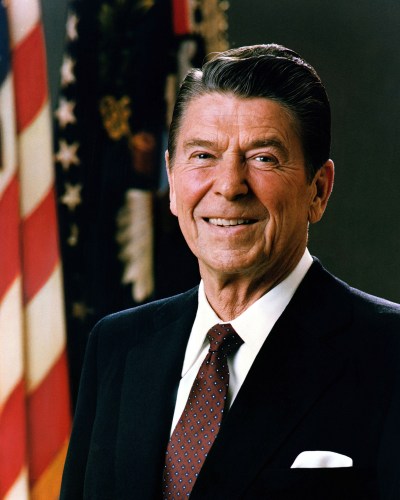
official_portrait_of_president_reagan_1981
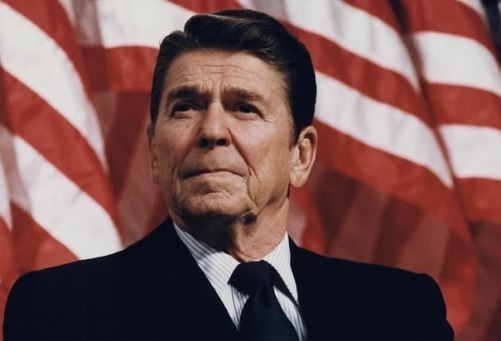
President Ronald W. Reagan, 40th President of the United States of America, 1981-1989. Source: https://upload.wikimedia.org/wikipedia/commons/1/16/Official_Portrait_of_President_Reagan_1981.jpg

Senator Hatfield, Mr. Chief Justice, Mr. President, Vice President Bush, Vice President Mondale, Senator Baker, Speaker O’Neill, Reverend Moomaw, and my fellow citizens:

To a few of us here today this is a solemn and most momentous occasion, and yet in the history of our nation it is a commonplace occurrence. The orderly transfer of authority as called for in the Constitution routinely takes place, as it has for almost two centuries, and few of us stop to think how unique we really are. In the eyes of many in the world, this every 4-year ceremony we accept as normal is nothing less than a miracle.

Mr. President, I want our fellow citizens to know how much you did to carry on this tradition. By your gracious cooperation in the transition process, you have shown a watching world that we are a united people pledged to maintaining a political system which guarantees individual liberty to a greater degree than any other, and I thank you and your people for all your help in maintaining the continuity which is the bulwark of our Republic.

The business of our nation goes forward. These United States are confronted with an economic affliction of great proportions. We suffer from the longest and one of the worst sustained inflations in our national history. It distorts our economic decisions, penalizes thrift, and crushes the struggling young and the fixed-income elderly alike. It threatens to shatter the lives of millions of our people.

Idle industries have cast workers into unemployment, human misery, and personal indignity. Those who do work are denied a fair return for their labor by a tax system which penalizes successful achievement and keeps us from maintaining full productivity.

But great as our tax burden is, it has not kept pace with public spending. For decades we have piled deficit upon deficit, mortgaging our future and our children’s future for the temporary convenience of the present. To continue this long trend is to guarantee tremendous social, cultural, political, and economic upheavals.

You and I, as individuals, can, by borrowing, live beyond our means, but for only a limited period of time. Why, then, should we think that collectively, as a nation, we’re not bound by that same limitation? We must act today in order to preserve tomorrow. And let there be no misunderstanding: We are going to begin to act, beginning today.

The economic ills we suffer have come upon us over several decades. They will not go away in days, weeks, or months, but they will go away. They will go away because we as Americans have the capacity now, as we’ve had in the past, to do whatever needs to be done to preserve this last and greatest bastion of freedom.

In this present crisis, government is not the solution to our problem; government is the problem. From time to time we’ve been tempted to believe that society has become too complex to be managed by self-rule, that government by an elite group is superior to government for, by, and of the people. Well, if no one among us is capable of governing himself, then who among us has the capacity to govern someone else? All of us together, in and out of government, must bear the burden. The solutions we seek must be equitable, with no one group singled out to pay a higher price.

We hear much of special interest groups. Well, our concern must be for a special interest group that has been too long neglected. It knows no sectional boundaries or ethnic and racial divisions, and it crosses political party lines. It is made up of men and women who raise our food, patrol our streets, man our mines and factories, teach our children, keep our homes, and heal us when we’re sick—professionals, industrialists, shopkeepers, clerks, cabbies, and truck drivers. They are, in short, “We the people,” this breed called Americans.

Well, this administration’s objective will be a healthy, vigorous, growing economy that provides equal opportunities for all Americans, with no barriers born of bigotry or discrimination. Putting America back to work means putting all Americans back to work. Ending inflation means freeing all Americans from the terror of runaway living costs. All must share in the productive work of this “new beginning,” and all must share in the bounty of a revived economy. With the idealism and fair play which are the core of our system and our strength, we can have a strong and prosperous America, at peace with itself and the world.

So, as we begin, let us take inventory. We are a nation that has a government—not the other way around. And this makes us special among the nations of the Earth. Our government has no power except that granted it by the people. It is time to check and reverse the growth of government, which shows signs of having grown beyond the consent of the governed.

It is my intention to curb the size and influence of the Federal establishment and to demand recognition of the distinction between the powers granted to the Federal Government and those reserved to the States or to the people. All of us need to be reminded that the Federal Government did not create the States; the States created the Federal Government.

Now, so there will be no misunderstanding, it’s not my intention to do away with government. It is rather to make it work–work with us, not over us; to stand by our side, not ride on our back. Government can and must provide opportunity, not smother it; foster productivity, not stifle it.

If we look to the answer as to why for so many years we achieved so much, prospered as no other people on Earth, it was because here in this land we unleashed the energy and individual genius of man to a greater extent than has ever been done before. Freedom and the dignity of the individual have been more available and assured here than in any other place on Earth. The price for this freedom at times has been high, but we have never been unwilling to pay that price.

It is no coincidence that our present troubles parallel and are proportionate to the intervention and intrusion in our lives that result from unnecessary and excessive growth of government. It is time for us to realize that we’re too great a nation to limit ourselves to small dreams. We’re not, as some would have us believe, doomed to an inevitable decline. I do not believe in a fate that will fall on us no matter what we do. I do believe in a fate that will fall on us if we do nothing. So, with all the creative energy at our command, let us begin an era of national renewal. Let us renew our determination, our courage, and our strength. And let us renew our faith and our hope.

We have every right to dream heroic dreams. Those who say that we’re in a time when there are not heroes, they just don’t know where to look. You can see heroes every day going in and out of factory gates. Others, a handful in number, produce enough food to feed all of us and then the world beyond. You meet heroes across a counter, and they’re on both sides of that counter. There are entrepreneurs with faith in themselves and faith in an idea who create new jobs, new wealth and opportunity. They’re individuals and families whose taxes support the government and whose voluntary gifts support church, charity, culture, art, and education. Their patriotism is quiet, but deep. Their values sustain our national life.

Now, I have used the words “they” and “their” in speaking of these heroes. I could say “you” and “your,” because I’m addressing the heroes of whom I speak—you, the citizens of this blessed land. Your dreams, your hopes, your goals are going to be the dreams, the hopes, and the goals of this administration, so help me God.

We shall reflect the compassion that is so much a part of your makeup. How can we love our country and not love our countrymen; and loving them, reach out a hand when they fall, heal them when they’re sick, and provide opportunity to make them self-sufficient so they will be equal in fact and not just in theory?

Can we solve the problems confronting us? Well, the answer is an unequivocal and emphatic “yes.” To paraphrase Winston Churchill, I did not take the oath I’ve just taken with the intention of presiding over the dissolution of the world’s strongest economy.

In the days ahead I will propose removing the roadblocks that have slowed our economy and reduced productivity. Steps will be taken aimed at restoring the balance between the various levels of government. Progress may be slow, measured in inches and feet, not miles, but we will progress. It is time to reawaken this industrial giant, to get government back within its means, and to lighten our punitive tax burden. And these will be our first priorities, and on these principles there will be no compromise.

On the eve of our struggle for independence a man who might have been one of the greatest among the Founding Fathers, Dr. Joseph Warren, president of the Massachusetts Congress, said to his fellow Americans, “Our country is in danger, but not to be despaired of . . . . On you depend the fortunes of America. You are to decide the important questions upon which rests the happiness and the liberty of millions yet unborn. Act worthy of yourselves.”

Well, I believe we, the Americans of today, are ready to act worthy of ourselves, ready to do what must be done to ensure happiness and liberty for ourselves, our children, and our children’s children. And as we renew ourselves here in our own land, we will be seen as having greater strength throughout the world. We will again be the exemplar of freedom and a beacon of hope for those who do not now have freedom.

To those neighbors and allies who share our freedom, we will strengthen our historic ties and assure them of our support and firm commitment. We will match loyalty with loyalty. We will strive for mutually beneficial relations. We will not use our friendship to impose on their sovereignty, for our own sovereignty is not for sale.

As for the enemies of freedom, those who are potential adversaries, they will be reminded that peace is the highest aspiration of the American people. We will negotiate for it, sacrifice for it; we will not surrender for it, now or ever.

Our forbearance should never be misunderstood. Our reluctance for conflict should not be misjudged as a failure of will. When action is required to preserve our national security, we will act. We will maintain sufficient strength to prevail if need be, knowing that if we do so we have the best chance of never having to use that strength.

Above all, we must realize that no arsenal or no weapon in the arsenals of the world is so formidable as the will and moral courage of free men and women. It is a weapon our adversaries in today’s world do not have. It is a weapon that we as Americans do have. Let that be understood by those who practice terrorism and prey upon their neighbors.

I’m told that tens of thousands of prayer meetings are being held on this day, and for that I’m deeply grateful. We are a nation under God, and I believe God intended for us to be free. It would be fitting and good, I think, if on each Inaugural Day in future years it should be declared a day of prayer.

This is the first time in our history that this ceremony has been held, as you’ve been told, on this West Front of the Capitol. Standing here, one faces a magnificent vista, opening up on this city’s special beauty and history. At the end of this open mall are those shrines to the giants on whose shoulders we stand.

Directly in front of me, the monument to a monumental man, George Washington, father of our country. A man of humility who came to greatness reluctantly. He led America out of revolutionary victory into infant nationhood. Off to one side, the stately memorial to Thomas Jefferson. The Declaration of Independence flames with his eloquence. And then, beyond the Reflecting Pool, the dignified columns of the Lincoln Memorial. Whoever would understand in his heart the meaning of America will find it in the life of Abraham Lincoln.

Beyond those monuments to heroism is the Potomac River, and on the far shore the sloping hills of Arlington National Cemetery, with its row upon row of simple white markers bearing crosses or Stars of David. They add up to only a tiny fraction of the price that has been paid for our freedom.

Each one of those markers is a monument to the kind of hero I spoke of earlier. Their lives ended in places called Belleau Wood, The Argonne, Omaha Beach, Salerno, and halfway around the world on Guadalcanal, Tarawa, Pork Chop Hill, the Chosin Reservoir, and in a hundred rice paddies and jungles of a place called Vietnam.

Under one such marker lies a young man, Martin Treptow, who left his job in a small town barbershop in 1917 to go to France with the famed Rainbow Division. There, on the western front, he was killed trying to carry a message between battalions under heavy artillery fire.

We’re told that on his body was found a diary. On the flyleaf under the heading, “My Pledge,” he had written these words: “America must win this war. Therefore I will work, I will save, I will sacrifice, I will endure, I will fight cheerfully and do my utmost, as if the issue of the whole struggle depended on me alone.”

The crisis we are facing today does not require of us the kind of sacrifice that Martin Treptow and so many thousands of others were called upon to make. It does require, however, our best effort and our willingness to believe in ourselves and to believe in our capacity to perform great deeds, to believe that together with God’s help we can and will resolve the problems which now confront us.

And after all, why shouldn’t we believe that? We are Americans.
God bless you, and thank you.

Ronald Reagan: “Inaugural Address,” January 20, 1981. Online by Gerhard Peters and John T. Woolley, The American Presidency Project. http://www.presidency.ucsb.edu/ws/?pid=43130.

President Jimmy Carter’s Inaugural Address, January 20, 1977*

jimmycarterportrait2
President Jimmy Carter, 39th President of the United States of America, 1977-1981. Source: https://upload.wikimedia.org/wikipedia/commons/5/5a/JimmyCarterPortrait2.jpg

For myself and for our Nation, I want to thank my predecessor for all he has done to heal our land.

In this outward and physical ceremony, we attest once again to the inner and spiritual strength of our Nation. As my high school teacher, Miss Julia Coleman, used to say, “We must adjust to changing times and still hold to unchanging principles.”

Here before me is the Bible used in the inauguration of our first President, in 1789, and I have just taken the oath of office on the Bible my mother gave me just a few years ago, opened to a timeless admonition from the ancient prophet Micah: “He hath showed thee, O man, what is good; and what doth the Lord require of thee, but to do justly, and to love mercy, and to walk humbly with thy God.”

This inauguration ceremony marks a new beginning, a new dedication within our Government, and a new spirit among us all. A President may sense and proclaim that new spirit, but only a people can provide it.

Two centuries ago, our Nation’s birth was a milestone in the long quest for freedom. But the bold and brilliant dream which excited the founders of this Nation still awaits its consummation. I have no new dream to set forth today, but rather urge a fresh faith in the old dream.

Ours was the first society openly to define itself in terms of both spirituality and human liberty. It is that unique self-definition which has given us an exceptional appeal, but it also imposes on us a special obligation to take on those moral duties which, when assumed, seem invariably to be in our own best interests.

You have given me a great responsibility–to stay close to you, to be worthy of you, and to exemplify what you are. Let us create together a new national spirit of unity and trust. Your strength can compensate for my weakness, and your wisdom can help to minimize my mistakes.

Let us learn together and laugh together and work together and pray together, confident that in the end we will triumph together in the right.

The American dream endures. We must once again have full faith in our country–and in one another. I believe America can be better. We can be even stronger than before.

Let our recent mistakes bring a resurgent commitment to the basic principles of our Nation, for we know that if we despise our own government, we have no future. We recall in special times when we have stood briefly, but magnificently, united. In those times no prize was beyond our grasp.

But we cannot dwell upon remembered glory. We cannot afford to drift. We reject the prospect of failure or mediocrity or an inferior quality of life for any person. Our Government must at the same time be both competent and compassionate.

We have already found a high degree of personal liberty, and we are now struggling to enhance equality of opportunity. Our commitment to human rights must be absolute, our laws fair, our national beauty preserved; the powerful must not persecute the weak, and human dignity must be enhanced.

We have learned that more is not necessarily better, that even our great Nation has its recognized limits, and that we can neither answer all questions nor solve all problems. We cannot afford to do everything, nor can we afford to lack boldness as we meet the future. So, together, in a spirit of individual sacrifice for the common good, we must simply do our best.

Our Nation can be strong abroad only if it is strong at home. And we know that the best way to enhance freedom in other lands is to demonstrate here that our democratic system is worthy of emulation.

To be true to ourselves, we must be true to others. We will not behave in foreign places so as to violate our rules and standards here at home, for we know that the trust which our Nation earns is essential to our strength.

The world itself is now dominated by a new spirit. Peoples more numerous and more politically aware are craving, and now demanding, their place in the sun–not just for the benefit of their own physical condition, but for basic human rights.

The passion for freedom is on the rise. Tapping this new spirit, there can be no nobler nor more ambitious task for America to undertake on this day of a new beginning than to help shape a just and peaceful world that is truly humane.

We are a strong nation, and we will maintain strength so sufficient that it need not be proven in combat–a quiet strength based not merely on the size of an arsenal but on the nobility of ideas.

We will be ever vigilant and never vulnerable, and we will fight our wars against poverty, ignorance, and injustice, for those are the enemies against which our forces can be honorably marshaled.

We are a proudly idealistic nation, but let no one confuse our idealism with weakness.

Because we are free, we can never be indifferent to the fate of freedom elsewhere. Our moral sense dictates a clear-cut preference for those societies which share with us an abiding respect for individual human rights. We do not seek to intimidate, but it is clear that a world which others can dominate with impunity would be inhospitable to decency and a threat to the well-being of all people.

The world is still engaged in a massive armaments race designed to ensure continuing equivalent strength among potential adversaries. We pledge perseverance and wisdom in our efforts to limit the world’s armaments to those necessary for each nation’s own domestic safety. And we will move this year a step toward our ultimate goal–the elimination of all nuclear weapons from this Earth. We urge all other people to join us, for success can mean life instead of death.

Within us, the people of the United States, there is evident a serious and purposeful rekindling of confidence. And I join in the hope that when my time as your President has ended, people might say this about our Nation:
–that we had remembered the words of Micah and renewed oursearch for humility, mercy, and justice;
–that we had torn down the barriers that separated those of different race and region and religion, and where there had been mistrust, built unity, with a respect for diversity;
–that we had found productive work for those able to perform it;
–that we had strengthened the American family, which is the basis of our society;

–that we had ensured respect for the law and equal treatment under the law, for the weak and the powerful, for the rich and the poor; and
–that we had enabled our people to be proud of their own Government once again.

I would hope that the nations of the world might say that we had built a lasting peace, based not on weapons of war but on international policies which reflect our own most precious values.

These are not just my goals—and they will not be my accomplishments-but the affirmation of our Nation’s continuing moral strength and our belief in an undiminished, ever-expanding American dream.

Thank you very much.

Jimmy Carter: “Inaugural Address,” January 20, 1977. Online by Gerhard Peters and John T. Woolley, The American Presidency Project. http://www.presidency.ucsb.edu/ws/?pid=6575.

President Richard M. Nixon’s Second Inaugural Address, January 20, 1973*

Nixon
President Richard M. Nixon, 37th President of the United States of America, 1969-1974. Source: https://media.salon.com/2014/01/richard_nixon.jpg

I, RICHARD NIXON, do solemnly swear that I will faithfully execute the Office of President of the United States, and will to the best of my ability, preserve, protect and defend the Constitution of the United States, so help me God.

Mr. Vice President, Mr. Speaker, Mr. Chief Justice, Senator Cook, Mrs. Eisenhower, and my fellow citizens of this great and good country we share together:

When we met here 4 years ago, America was bleak in spirit, depressed by the prospect of seemingly endless war abroad and of destructive conflict at home.

As we meet here today, we stand on the threshold of a new era of peace in the world.

The central question before us is: How shall we use that peace?

Let us resolve that this era we are about to enter will not be what other postwar periods have so often been: a time of retreat and isolation that leads to stagnation at home and invites new danger abroad.

Let us resolve that this will be what it can become: a time of great responsibilities greatly borne, in which we renew the spirit and the promise of America as we enter our third century as a nation.

This past year saw far-reaching results from our new policies for peace. By continuing to revitalize our traditional friendships, and by our missions to Peking and to Moscow, we were able to establish the base for a new and more durable pattern of relationships among the nations of the world. Because of America’s bold initiatives, 1972 will be long remembered as the year of the greatest progress since the end of World War II toward a lasting peace in the world.

The peace we seek in the world is not the flimsy peace which is merely an interlude between wars, but a peace which can endure for generations to come.

It is important that we understand both the necessity and the limitations of America’s role in maintaining that peace.

Unless we in America work to preserve the peace, there will be no peace.

Unless we in America work to preserve freedom, there will be no freedom.

But let us clearly understand the new nature of America’s role, as a result of the new policies we have adopted over these past 4 years.

We shall respect our treaty commitments.

We shall support vigorously the principle that no country has the right to impose its will or rule on another by force.

We shall continue, in this era of negotiation, to work for the limitation of nuclear arms and to reduce the danger of confrontation between the great powers.

We shall do our share in defending peace and freedom in the world. But we shall expect others to do their share.

The time has passed when America will make every other nation’s conflict our own, or make every other nation’s future our responsibility, or presume to tell the people of other nations how to manage their own affairs.

Just as we respect the right of each nation to determine its own future, we also recognize the responsibility of each nation to secure its own future.

Just as America’s role is indispensable in preserving the world’s peace, so is each nation’s role indispensable in preserving its own peace.

Together with the rest of the world, let us resolve to move forward from the beginnings we have made. Let us continue to bring down the walls of hostility which have divided the world for too long, and to build in their place bridges of understanding–so that despite profound differences between systems of government, the people of the world can be friends.

Let us build a structure of peace in the world in which the weak are as safe as the strong, in which each respects the right of the other to live by a different system, in which those who would influence others will do so by the strength of their ideas and not by the force of their arms.

Let us accept that high responsibility not as a burden, but gladly–gladly because the chance to build such a peace is the noblest endeavor in which a nation can engage; gladly also because only if we act greatly in meeting our responsibilities abroad will we remain a great nation, and only if we remain a great nation will we act greatly in meeting our challenges at home.

We have the chance today to do more than ever before in our history to make life better in America–to ensure better education, better health, better housing, better transportation, a cleaner environment-to restore respect for law, to make our communities more livable–and to ensure the God-given right of every American to full and equal opportunity.

Because the range of our needs is so great, because the reach of our opportunities is so great, let us be bold in our determination to meet those needs in new ways.

Just as building a structure of peace abroad has required turning away from old policies that have failed, so building a new era of progress at home requires turning away from old policies that have failed.

Abroad, the shift from old policies to new has not been a retreat from our responsibilities, but a better way to peace.

And at home, the shift from old policies to new will not be a retreat from our responsibilities, but a better way to progress.

Abroad and at home, the key to those new responsibilities lies in the placing and the division of responsibility. We have lived too long with the consequences of attempting to gather all power and responsibility in Washington.

Abroad and at home, the time has come to turn away from the condescending policies of paternalism—of “Washington knows best.”

A person can be expected to act responsibly only if he has responsibility. This is human nature. So let us encourage individuals at home and nations abroad to do more for themselves, to decide more for themselves. Let us locate responsibility in more places. And let us measure what we will do for others by what they will do for themselves.

That is why today I offer no promise of a purely governmental solution for every problem. We have lived too long with that false promise. In trusting too much in government, we have asked of it more than it can deliver. This leads only to inflated expectations, to reduced individual effort, and to a disappointment and frustration that erode confidence both in what government can do and in what people can do.

Government must learn to take less from people so that people can do more for themselves.

Let us remember that America was built not by government, but by people; not by welfare, but by work; not by shirking responsibility, but by seeking responsibility.

In our own lives, let each of us ask-not just what will government do for me, but what can I do for myself?

In the challenges we face together, let each of us ask–not just how can government help, but how can I help?

Your National Government has a great and vital role to play. And I pledge to you that where this Government should act, we will act boldly and we will lead boldly. But just as important is the role that each and every one of us must play, as an individual and as a member of his own community.

From this day forward, let each of us make a solemn commitment in his own heart: to bear his responsibility, to do his part, to live his ideals–so that together we can see the dawn of a new age of progress for America, and together, as we celebrate our 200th anniversary as a nation, we can do so proud in the fulfillment of our promise to ourselves and to the world.

As America’s longest and most difficult war comes to an end, let us again learn to debate our differences with civility and decency. And let each of us reach out for that one precious quality government cannot provide–a new level of respect for the rights and feelings of one another, a new level of respect for the individual human dignity which is the cherished birthright of every American.

Above all else, the time has come for us to renew our faith in ourselves and in America.

In recent years, that faith has been challenged.

Our children have been taught to be ashamed of their country, ashamed of their parents, ashamed of America’s record at home and its role in the world.

At every turn we have been beset by those who find everything wrong with America and little that is right. But I am confident that this will not be the judgment of history on these remarkable times in which we are privileged to live.

America’s record in this century has been unparalleled in the world’s h!story for its responsibility, for its generosity, for its creativity, and for its progress.

Let us be proud that our system has produced and provided more freedom and more abundance, more widely shared, than any system in the history of the world.

Let us be proud that in each of the four wars in which we have been engaged in this century, including the one we are now bringing to an end, we have fought not for our selfish advantage, but to help others resist aggression.

And let us be proud that by our bold, new initiatives, by our steadfastness for peace with honor, we have made a breakthrough toward creating in the world what the world has not known before–a structure of peace that can last, not merely for our time, but for generations to come. We are embarking here today on an era that presents challenges as great as those any nation, or any generation, has ever faced.

We shall answer to God, to history, and to our conscience for the way in which we use these years.

As I stand in this place, so hallowed by history, I think of others who have stood here before me. I think of the dreams they had for America and I think of how each recognized that he needed help far beyond himself in order to make those dreams come true.

Today I ask your prayers that in the years ahead I may have God’s help in making decisions that are right for America, and I pray for your help so that together we may be worthy of our challenge.

Let us pledge together to make these next 4 years the best 4 years in America’s history, so that on its 200th birthday America will be as young and as vital as when it began, and as bright a beacon of hope for all the world.

Let us go forward from here confident in hope, strong in our faith in one another, sustained by our faith in God who created us, and striving always to serve His purpose.

Richard Nixon: “Oath of Office and Second Inaugural Address.,” January 20, 1973. Online by Gerhard Peters and John T. Woolley, The American Presidency Project. http://www.presidency.ucsb.edu/ws/?pid=4141.