President John F. Kennedy’s Inaugural Address, January 20, 1961*

a4311e1f48ae4a1ddf84efe62af0e0de-los-kennedy-robert-kennedy
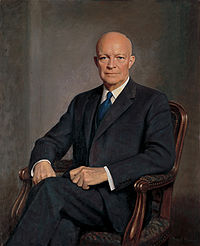
President John F. Kennedy, 35th President of the United States of America, 1961-1963. Source: https://i.pinimg.com/236x/a4/31/1e/a4311e1f48ae4a1ddf84efe62af0e0de–los-kennedy-robert-kennedy.jpg

Vice President Johnson, Mr. Speaker, Mr. Chief Justice, President Eisenhower, Vice president Nixon, President Truman, Reverend Clergy, fellow citizens:

We observe today not a victory of party but a celebration of freedom–symbolizing an end as well as a beginning–signifying renewal as well as change. For I have sworn before you and Almighty God the same solemn oath our forebears prescribed nearly a century and three quarters ago.

The world is very different now. For man holds in his mortal hands the power to abolish all forms of human poverty and all forms of human life. And yet the same revolutionary beliefs for which our forebears fought are still at issue around the globe–the belief that the rights of man come not from the generosity of the state but from the hand of God.

We dare not forget today that we are the heirs of that first revolution. Let the word go forth from this time and place, to friend and foe alike, that the torch has been passed to a new generation of Americans–born in this century, tempered by war, disciplined by a hard and bitter peace, proud of our ancient heritage–and unwilling to witness or permit the slow undoing of those human rights to which this nation has always been committed, and to which we are committed today at home and around the world.

Let every nation know, whether it wishes us well or ill, that we shall pay any price, bear any burden, meet any hardship, support any friend, oppose any foe to assure the survival and the success of liberty.

This much we pledge–and more.

To those old allies whose cultural and spiritual origins we share, we pledge the loyalty of faithful friends. United, there is little we cannot do in a host of cooperative ventures. Divided, there is little we can do–for we dare not meet a powerful challenge at odds and split asunder.

To those new states whom we welcome to the ranks of the free, we pledge our word that one form of colonial control shall not have passed away merely to be replaced by a far more iron tyranny. We shall not always expect to find them supporting our view. But we shall always hope to find them strongly supporting their own freedom-and to remember that, in the past, those who foolishly sought power by riding the back of the tiger ended up inside.

To those peoples in the huts and villages of half the globe struggling to break the bonds of mass misery, we pledge our best efforts to help them help themselves, for whatever period is required–not because the communists may be doing it, not because we seek their votes, but because it is right. If a free society cannot help the many who are poor, it cannot save the few who are rich.

To our sister republics south of our border, we offer a special pledge–to convert our good words into good deeds–in a new alliance for progress–to assist free men and free governments in casting off the chains of poverty. But this peaceful revolution of hope cannot become the prey of hostile powers. Let all our neighbors know that we shall join with them to oppose aggression or subversion anywhere in the Americas. And let every other power know that this Hemisphere intends to remain the master of its own house.

To that world assembly of sovereign states, the United Nations, our last best hope in an age where the instruments of war have far outpaced the instruments of peace, we renew our pledge of support–to prevent it from becoming merely a forum for invective–to strengthen its shield of the new and the weak–and to enlarge the area in which its writ may run.

Finally, to those nations who would make themselves our adversary, we offer not a pledge but a request: that both sides begin anew the quest for peace, before the dark powers of destruction unleashed by science engulf all humanity in planned or accidental self-destruction.

We dare not tempt them with weakness. For only when our arms are sufficient beyond doubt can we be certain beyond doubt that they will never be employed.

But neither can two great and powerful groups of nations take comfort from our present course–both sides overburdened by the cost of modern weapons, both rightly alarmed by the steady spread of the deadly atom, yet both racing to alter that uncertain balance of terror that stays the hand of mankind’s final war.

So let us begin anew–remembering on both sides that civility is not a sign of weakness, and sincerity is always subject to proof. Let us never negotiate out of fear. But let us never fear to negotiate.

Let both sides explore what problems unite us instead of belaboring those problems which divide us.

Let both sides, for the first time, formulate serious and precise proposals for the inspection and control of arms–and bring the absolute power to destroy other nations under the absolute control of all nations.

Let both sides seek to invoke the wonders of science instead of its terrors. Together let us explore the stars, conquer the deserts, eradicate disease, tap the ocean depths and encourage the arts and commerce.

Let both sides unite to heed in all corners of the earth the command of Isaiah–to “undo the heavy burdens . . . (and) let the oppressed go free.”

And if a beach-head of cooperation may push back the jungle of suspicion, let both sides join in creating a new endeavor, not a new balance of power, but a new world of law, where the strong are just and the weak secure and the peace preserved.

All this will not be finished in the first one hundred days. Nor will it be finished in the first one thousand days, nor in the life of this Administration, nor even perhaps in our lifetime on this planet. But let us begin.

In your hands, my fellow citizens, more than mine, will rest the final success or failure of our course. Since this country was founded, each generation of Americans has been summoned to give testimony to its national loyalty. The graves of young Americans who answered the call to service surround the globe.

Now the trumpet summons us again-not as a call to bear arms, though arms we need–not as a call to battle, though embattled we are–but a call to bear the burden of a long twilight struggle, year in and year out, “rejoicing in hope, patient in tribulation”–a struggle against the common enemies of man: tyranny, poverty, disease and war itself.

Can we forge against these enemies a grand and global alliance, North and South, East and West, that can assure a more fruitful life for all mankind? Will you join in that historic effort?

In the long history of the world, only a few generations have been granted the role of defending freedom in its hour of maximum danger. I do not shrink from this responsibility–I welcome it. I do not believe that any of us would exchange places with any other people or any other generation. The energy, the faith, the devotion which we bring to this endeavor will light our country and all who serve it–and the glow from that fire can truly light the world.

And so, my fellow Americans: ask not what your country can do for you–ask what you can do for your country.

My fellow citizens of the world: ask not what America will do for you, but what together we can do for the freedom of man.

Finally, whether you are citizens of America or citizens of the world, ask of us here the same high standards of strength and sacrifice which we ask of you. With a good conscience our only sure reward, with history the final judge of our deeds, let us go forth to lead the land we love, asking His blessing and His help, but knowing that here on earth God’s work must truly be our own.

John F. Kennedy: “Inaugural Address,” January 20, 1961. Online by Gerhard Peters and John T. Woolley, The American Presidency Project. http://www.presidency.ucsb.edu/ws/?pid=8032.
President Dwight D. Eisenhower’s Second Inaugural Address, January 21, 1957*

200px-eisenhower_by_stephens
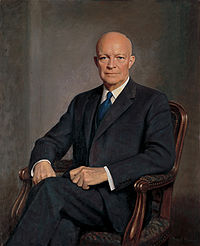
President Dwight D. Eisenhower, 34th President of the United States of America, 1953-1961. Source: https://www.conservapedia.com/images/thumb/9/9e/Eisenhower_by_Stephens.jpg/200px-Eisenhower_by_Stephens.jpg

Mr. Chairman, Mr. Vice President, Mr. Chief Justice, Mr. Speaker, members of my family and friends, my countrymen, and the friends of my country wherever they may be:

We meet again, as upon a like moment four years ago, and again you have witnessed my solemn oath of service to you.

I, too, am a witness, today testifying in your name to the principles and purposes to which we, as a people, are pledged.

Before all else, we seek, upon our common labor as a nation, the blessings of Almighty God. And the hopes in our hearts fashion the deepest prayers of our whole people.

May we pursue the right–without self-righteousness.

May we know unity–without conformity.

May we grow in strength–without pride in self.

May we, in our dealings with all peoples of the earth, ever speak truth and serve justice.

And so shall America–in the sight of all men of good will-prove true to the honorable purposes that bind and rule us as a people in all this time of trial through which we pass.

We live in a land of plenty, but rarely has this earth known such peril as today.

In our nation work and wealth abound. Our population grows. Commerce crowds our rivers and rails, our skies, harbors and highways. Our soil is fertile, our agriculture productive. The air rings with the song of our industry–rolling mills and blast furnaces, dynamos, dams and assembly lines–the chorus of America the bountiful.

Now this is our home–yet this is not the whole of our world. For our world is where our full destiny lies–with men, of all peoples and all nations, who are or would be free. And for them–and so for us–this is no time of ease or of rest.

In too much of the earth there is want, discord, danger. New forces and new nations stir and strive across the earth, with power to bring, by their fate, great good or great evil to the free world’s future. From the deserts of North Africa to the islands of the South Pacific one third of all mankind has entered upon an historic struggle for a new freedom: freedom from grinding poverty. Across all continents, nearly a billion people seek, sometimes almost in desperation, for the skills and knowledge and assistance by which they may satisfy from their own resources, the material wants common to all mankind.

No nation, however old or great, escapes this tempest of change and turmoil. Some, impoverished by the recent World War, seek to restore their means of livelihood. In the heart of Europe, Germany still stands tragically divided. So is the whole continent divided. And so, too, all the world.

The divisive force is International Communism and the power that it controls.

The designs of that power, dark in purpose, are clear in practice. It strives to seal forever the fate of those it has enslaved. It strives to break the ties that unite the free. And it strives to capture–to exploit for its own greater power–all forces of change in the world, especially the needs of the hungry and the hopes of the oppressed.

Yet the world of International Communism has itself been shaken by a fierce and mighty force: the readiness of men who love freedom to pledge their lives to that love. Through the night of their bondage, the unconquerable will of heroes has struck with the swift, sharp thrust of lightning. Budapest is no longer merely the name of a city; henceforth it is a new and shining symbol of man’s yearning to be free.

Thus across all the globe there harshly blow the winds of change. And, we–though fortunate be our lot–know that we can never turn our backs to them.

We look upon this shaken earth, and we declare our firm and fixed purpose–the building of a peace with justice in a world where moral law prevails.

The building of such a peace is a bold and solemn purpose. To proclaim it is easy. To serve it will be hard. And to attain it, we must be aware of its full meaning–and ready to pay its full price.

We know clearly what we seek, and why.

We seek peace, knowing that peace is the climate of freedom. And now, as in no other age, we seek it because we have been warned, by the power of modern weapons, that peace may be the only climate possible for human life itself.

Yet this peace we seek cannot be born of fear alone: it must be rooted in the lives of nations. There must be justice, sensed and shared by all peoples, for, without justice the world can know only a tense and unstable truce. There must be law, steadily invoked and respected by all nations, for without law, the world promises only such meager justice as the pity of the strong upon the weak. But the law of which we speak, comprehending the values of freedom, affirms the equality of all nations, great and small.

Splendid as can be the blessings of such a peace, high will be its cost: in toil patiently sustained, in help honorably given, in sacrifice calmly borne.

We are called to meet the price of this peace.

To counter the threat of those who seek to rule by force, we must pay the costs of our own needed military strength, and help to build the security of others.

We must use our skills and knowledge and, at times, our substance, to help others rise from misery, however far the scene of suffering may be from our shores. For wherever in the world a people knows desperate want, there must appear at least the spark of hope, the hope of progress or there will surely rise at last the flames of conflict.

We recognize and accept our own deep involvement in the destiny of men everywhere. We are accordingly pledged to honor, and to strive to fortify, the authority of the United Nations. For in that body rests the best hope of our age for the assertion of that law by which all nations may live in dignity.

And beyond this general resolve, we are called to act a responsible role in the world’s great concerns or conflicts–whether they touch upon the affairs of a vast region, the fate of an island in the Pacific, or the use of a canal in the Middle East. Only in respecting the hopes and cultures of others will we practice the equality of all nations. Only as we show willingness and wisdom in giving counsel in receiving counsel–and in sharing burdens, will we wisely perform the work of peace.

For one truth must rule all we think and all we do. No people can live to itself alone. The unity of all who dwell in freedom is their only sure defense. The economic need of all nations-in mutual dependence–makes isolation an impossibility: not even America’s prosperity could long survive if other nations did not also prosper. No nation can longer be a fortress, lone and strong and safe. And any people, seeking such shelter for themselves, can now build only their own prison.

Our pledge to these principles is constant, because we believe in their rightness.

We do not fear this world of change. America is no stranger to much of its spirit. Everywhere we see the seeds of the same growth that America itself has known. The American experiment has, for generations, fired the passion and the courage of millions elsewhere seeking freedom, equality, opportunity. And the American story of material progress has helped excite the longing of all needy peoples for some satisfaction of their human wants. These hopes that we have helped to inspire, we can help to fulfill.

In this confidence, we speak plainly to all peoples.

We cherish our friendship with all nations that are or would be free. We respect, no less, their independence. And when, in time of want or peril, they ask our help, they may honorably receive it; for we no more seek to buy their sovereignty than we would sell our own. Sovereignty is never bartered among free

We honor the aspirations of those nations which, now captive, long for freedom. We seek neither their military alliance nor any artificial imitation of our society. And they can know the warmth of the welcome that awaits them when, as must be, they join again the ranks of freedom.

We honor, no less in this divided world than in a less tormented time, the people of Russia. We do not dread, rather do we welcome, their progress in education and industry. We wish them success in their demands for more intellectual freedom, greater security before their own laws, fuller enjoyment of the rewards of their own toil. For as such things come to pass, the more certain will be the coming of that day when our peoples may freely meet in friendship.

So we voice our hope and our belief that we can help to heal this divided world. Thus may the nations cease to live in trembling before the menace of force. Thus may the weight of fear and the weight of arms be taken from the burdened shoulders of mankind.

This, nothing less, is the labor to which we are called and our strength dedicated.

And so the prayer of our people carries far beyond our own frontiers, to the wide world of our duty and our destiny.

May the light of freedom, coming to all darkened lands, flame brightly–until at last the darkness is no more.

May the turbulence of our age yield to a true time of peace, when men and nations shall share a life that honors the dignity of each, the brotherhood of all.

Thank you very much.

Dwight D. Eisenhower: “Second Inaugural Address,” January 21, 1957. Online by Gerhard Peters and John T. Woolley, The American Presidency Project. http://www.presidency.ucsb.edu/ws/?pid=10856.

President Dwight D. Eisenhower’s First Inaugural Address, January 20, 1953*

dwight-d-eisenhower-9285482-1-402
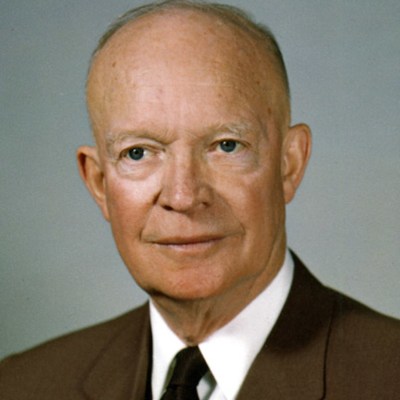
President Dwight D. Eisenhower, 34th President of the United States of America, 1953-1961. Source: https://www.biography.com/.image/t_share/MTE5NTU2MzE2MjExMjE3OTMx/dwight-d-eisenhower-9285482-1-402.jpg

My friends, before I begin the expression of those thoughts that I deem appropriate to this moment, would you permit me the privilege of uttering a little private prayer of my own. And I ask that you bow your heads:

Almighty God, as we stand here at this moment my future associates in the Executive branch of Government join me in beseeching that Thou will make full and complete our dedication to the service of the people in this throng, and their fellow citizens everywhere.

Give us, we pray, the power to discern clearly right from wrong, and allow all our words and actions to be governed thereby, and by the laws of this land. Especially we pray that our concern shall be for all the people regardless of station, race or calling.

May cooperation be permitted and be the mutual aim of those who, under the concepts of our Constitution, hold to differing political faiths; so that all may work for the good of our beloved country and Thy glory. Amen.

My fellow citizens:

The world and we have passed the midway point of a century of continuing challenge. We sense with all our faculties that forces of good and evil are massed and armed and opposed as rarely before in history.

This fact defines the meaning of this day. We are summoned by this honored and historic ceremony to witness more than the act of one citizen swearing his oath of service, in the presence of God. We are called as a people to give testimony in the sight of the world to our faith that the future shall belong to the free.

Since this century’s beginning, a time of tempest has seemed to come upon the continents of the earth. Masses of Asia have awakened to strike off shackles of the past. Great nations of Europe have fought their bloodiest wars. Thrones have toppled and their vast empires have disappeared. New nations have been born.

For our own country, it has been a time of recurring trial. We have grown in power and in responsibility. We have passed through the anxieties of depression and of war to a summit unmatched in man’s history. Seeking to secure peace in the world, we have had to fight through the forests of the Argonne to the shores of Iwo Jima, and to the cold mountains of Korea.

In the swift rush of great events, we find ourselves groping to know the full sense and meaning of these times in which we live. In our quest of understanding, we beseech God’s guidance. We summon all our knowledge of the past and we scan all signs of the future. We bring all our wit and all our will to meet the question:

How far have we come in man’s long pilgrimage from darkness toward the light? Are we nearing the light–a day of freedom and of peace for all mankind? Or are the shadows of another night closing in upon us?

Great as are the preoccupations absorbing us at home, concerned as we are with matters that deeply affect our livelihood today and our vision of the future, each of these domestic problems is dwarfed by, and often even created by, this question that involves all humankind.

This trial comes at a moment when man’s power to achieve good or to inflict evil surpasses the brightest hopes and the sharpest fears of all ages. We can turn rivers in their courses, level mountains to the plains. Oceans and land and sky are avenues for our colossal commerce. Disease diminishes and life lengthens.

Yet the promise of this life is imperiled by the very genius that has made it possible. Nations amass wealth. Labor sweats to create–and turns out devices to level not only mountains but also cities. Science seems ready to confer upon us, as its final gift, the power to erase human life from this planet.

At such a time in history, we who are free must proclaim anew our faith. This faith is the abiding creed of our fathers. It is our faith in the deathless dignity of man, governed by eternal moral and natural laws.

This faith defines our full view of life. It establishes, beyond debate, those gifts of the Creator that are man’s inalienable rights, and that make all men equal in His sight.

In the light of this equality, we know that the virtues most cherished by free people–love of truth, pride of work, devotion to country–all are treasures equally precious in the lives of the most humble and of the most exalted. The men who mine coal and fire furnaces, and balance ledgers, and turn lathes, and pick cotton, and heal the sick and plant corn–all serve as proudly and as profitably for America as the statesmen who draft treaties and the legislators who enact laws.

This faith rules our whole way of life. It decrees that we, the people, elect leaders not to rule but to serve. It asserts that we have the right to choice of our own work and to the reward of our own toil. It inspires the initiative that makes our productivity the wonder of the world. And it warns that any man who seeks to deny equality among all his brothers betrays the spirit of the free and invites the mockery of the tyrant.

It is because we, all of us, hold to these principles that the political changes accomplished this day do not imply turbulence, upheaval or disorder. Rather this change expresses a purpose of strengthening our dedication and devotion to the precepts of our founding documents, a conscious renewal of faith in our country and in the watchfulness of a Divine Providence.

The enemies of this faith know no god but force, no devotion but its use. They tutor men in treason. They feed upon the hunger of others. Whatever defies them, they torture, especially the truth.

Here, then, is joined no argument between slightly differing philosophies. This conflict strikes directly at the faith of our fathers and the lives of our sons. No principle or treasure that we hold, from the spiritual knowledge of our free schools and churches to the creative magic of free labor and capital, nothing lies safely beyond the reach of this struggle.

Freedom is pitted against slavery; lightness against the dark

The faith we hold belongs not to us alone but to the free of all the world. This common bond binds the grower of rice in Burma and the planter of wheat in Iowa, the shepherd in southern Italy and the mountaineer in the Andes. It confers a common dignity upon the French soldier who dies in Indo-China, the British soldier killed in Malaya, the American life given in Korea.

We know, beyond this, that we are linked to all free peoples not merely by a noble idea but by a simple need. No free people can for long cling to any privilege or enjoy any safety in economic solitude. For all our own material might, even we need markets in the world for the surpluses of our farms and our factories. Equally, we need for these same farms and factories vital materials and products of distant lands. This basic law of interdependence, so manifest in the commerce of peace, applies with thousand-fold intensity in the event of war.

So we are persuaded by necessity and by belief that the strength of all free peoples lies in unity; their danger, in discord.

To produce this unity, to meet the challenge of our time, destiny has laid upon our country the responsibility of the free world’s leadership.

So it is proper that we assure our friends once again that, in the discharge of this responsibility, we Americans know and we observe the difference between world leadership and imperialism; between firmness and truculence; between a thoughtfully calculated goal and spasmodic reaction to the stimulus of emergencies.

We wish our friends the world over to know this above all: we face the threat–not with dread and confusion–but with confidence and conviction.

We feel this moral strength because we know that we are not helpless prisoners of history. We are free men. We shall remain free, never to be proven guilty of the one capital offense against freedom, a lack of stanch faith.

In pleading our just cause before the bar of history and in pressing our labor for world peace, we shall be guided by certain fixed principles. These principles are:

1. Abhorring war as a chosen way to balk the purposes of those who threaten us, we hold it to be the first task of statesmanship to develop the strength that will deter the forces of aggression and promote the conditions of peace. For, as it must be the supreme purpose of all free men, so it must be the dedication of their leaders, to save humanity from preying upon itself.

In the light of this principle, we stand ready to engage with any and all others in joint effort to remove the causes of mutual fear and distrust among nations, so as to make possible drastic reduction of armaments. The sole requisites for undertaking such effort are that–in their purpose–they be aimed logically and honestly toward secure peace for all; and that–in their result–they provide methods by which every participating nation will prove good faith in carrying out its pledge.

2. Realizing that common sense and common decency alike dictate the futility of appeasement, we shall never try to placate an aggressor by the false and wicked bargain of trading honor for security. Americans, indeed, all free men, remember that in the final choice a soldier’s pack is not so heavy a burden as a prisoner’s chains.

3. Knowing that only a United States that is strong and immensely productive can help defend freedom in our world, we view our Nation’s strength and security as a trust upon which rests the hope of free men everywhere. It is the firm duty of each of our free citizens and of every free citizen everywhere to place the cause of his country before the comfort, the convenience of himself.

4. Honoring the identity and the special heritage of each nation in the world, we shall never use our strength to try to impress upon another people our own cherished political and economic institutions.

5. Assessing realistically the needs and capacities of proven friends of freedom, we shall strive to help them to achieve their own security and well-being. Likewise, we shall count upon them to assume, within the limits of their resources, their full and just burdens in the common defense of freedom.

6. Recognizing economic health as an indispensable basis of military strength and the free world’s peace, we shall strive to foster everywhere, and to practice ourselves, policies that encourage productivity and profitable trade. For the impoverishment of any single people in the world means danger to the well-being of all other peoples.

7. Appreciating that economic need, military security and political wisdom combine to suggest regional groupings of free peoples, we hope, within the framework of the United Nations, to help strengthen such special bonds the world over. The nature of these ties must vary with the different problems of different areas.

In the Western Hemisphere, we enthusiastically join with all our neighbors in the work of perfecting a community of fraternal trust and common purpose.

In Europe, we ask that enlightened and inspired leaders of the Western nations strive with renewed vigor to make the unity of their peoples a reality. Only as free Europe unitedly marshals its strength can it effectively safeguard, even with our help, its spiritual and cultural heritage.

8. Conceiving the defense of freedom, like freedom itself, to be one and indivisible, we hold all continents and peoples in equal regard and honor. We reject any insinuation that one race or another, one people or another, is in any sense inferior or expendable.

9. Respecting the United Nations as the living sign of all people’s hope for peace, we shall strive to make it not merely an eloquent symbol but an effective force. And in our quest for an honorable peace, we shall neither compromise, nor tire, nor ever cease.

By these rules of conduct, we hope to be known to all peoples.

By their observance, an earth of peace may become not a vision but a fact.

This hope–this supreme aspiration–must rule the way we live.

We must be ready to dare all for our country. For history does not long entrust the care of freedom to the weak or the timid. We must acquire proficiency in defense and display stamina in purpose.

We must be willing, individually and as a Nation, to accept whatever sacrifices may be required of us. A people that values its privileges above its principles soon loses both.

These basic precepts are not lofty abstractions, far removed from matters of daily living. They are laws of spiritual strength that generate and define our material strength. Patriotism means equipped forces and a prepared citizenry. Moral stamina means more energy and more productivity, on the farm and in the factory. Love of liberty means the guarding of every resource that makes freedom possible–from the sanctity of our families and the wealth of our soil to the genius of our scientists.

And so each citizen plays an indispensable role. The productivity of our heads, our hands and our hearts is the source of all the strength we can command, for both the enrichment of our lives and the winning of the peace.

No person, no home, no community can be beyond the reach of this call. We are summoned to act in wisdom and in conscience, to work with industry, to teach with persuasion, to preach with conviction, to weigh our every deed with care and with compassion. For this truth must be clear before us: whatever America hopes to bring to pass in the world must first come to pass in the heart of America.

The peace we seek, then, is nothing less than the practice and fulfillment of our whole faith among ourselves and in our dealings with others. This signifies more than the stilling of guns, casing the sorrow of war. More than escape from death, it is a way of life. More than a haven for the weary, it is a hope for the brave.

This is the hope that beckons us onward in this century of trial. This is the work that awaits us all, to be done with bravery, with charity, and with prayer to Almighty God.

My citizens–I thank you.

Dwight D. Eisenhower: “Inaugural Address,” January 20, 1953. Online by Gerhard Peters and John T. Woolley, The American Presidency Project. http://www.presidency.ucsb.edu/ws/?pid=9600.