President Benjamin Harrison’s Inaugural Address, March 4, 1889*

1280px-pach_brothers_-_benjamin_harrison
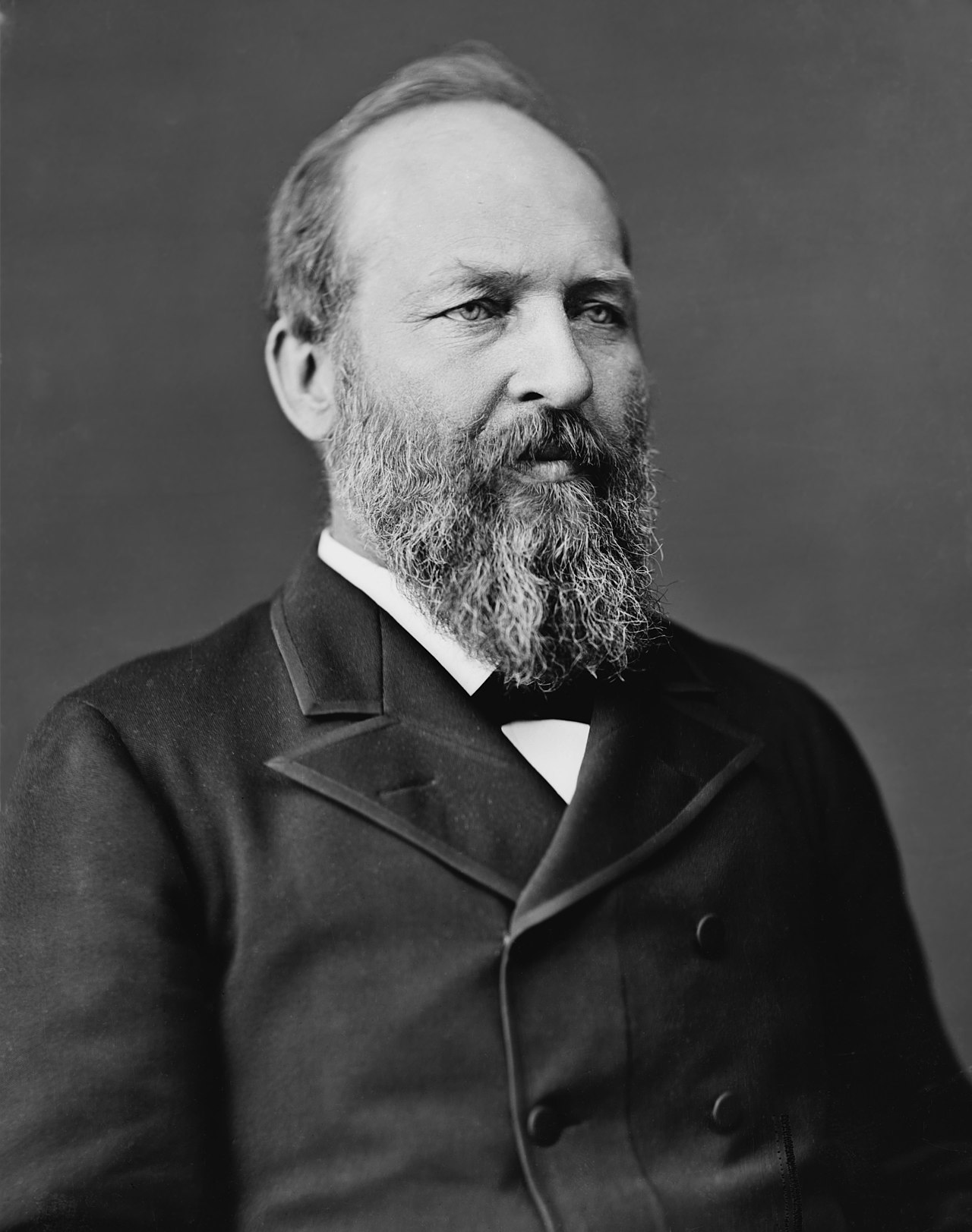
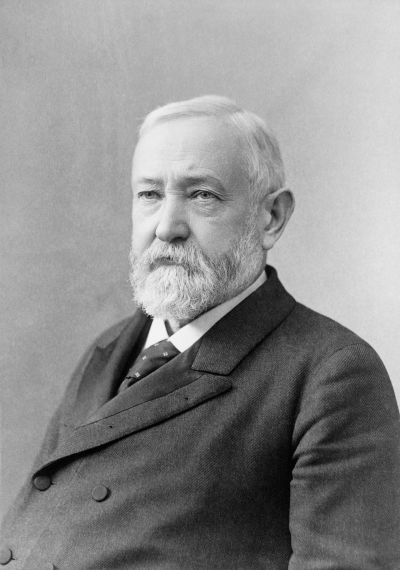
President Benjamin Harrison, 23rd President of the United States of America, 1889-1893. Source: https://upload.wikimedia.org/wikipedia/commons/thumb/7/7e/Pach_Brothers_-_Benjamin_Harrison.jpg/1280px-Pach_Brothers_-_Benjamin_Harrison.jpg

Fellow-Citizens:

There is no constitutional or legal requirement that the President shall take the oath of office in the presence of the people, but there is so manifest an appropriateness in the public induction to office of the chief executive officer of the nation that from the beginning of the Government the people, to whose service the official oath consecrates the officer, have been called to witness the solemn ceremonial. The oath taken in the presence of the people becomes a mutual covenant. The officer covenants to serve the whole body of the people by a faithful execution of the laws, so that they may be the unfailing defense and security of those who respect and observe them, and that neither wealth, station, nor the power of combinations shall be able to evade their just penalties or to wrest them from a beneficent public purpose to serve the ends of cruelty or selfishness.

My promise is spoken; yours unspoken, but not the less real and solemn. The people of every State have here their representatives. Surely I do not misinterpret the spirit of the occasion when I assume that the whole body of the people covenant with me and with each other to-day to support and defend the Constitution and the Union of the States, to yield willing obedience to all the laws and each to every other citizen his equal civil and political rights. Entering thus solemnly into covenant with each other, we may reverently invoke and confidently expect the favor and help of Almighty God–that He will give to me wisdom, strength, and fidelity, and to our people a spirit of fraternity and a love of righteousness and peace.

This occasion derives peculiar interest from the fact that the Presidential term which begins this day is the twenty-sixth under our Constitution. The first inauguration of President Washington took place in New York, where Congress was then sitting, on the 30th day of April, 1789, having been deferred by reason of delays attending the organization of the Congress and the canvass of the electoral vote. Our people have already worthily observed the centennials of the Declaration of Independence, of the battle of Yorktown, and of the adoption of the Constitution, and will shortly celebrate in New York the institution of the second great department of our constitutional scheme of government. When the centennial of the institution of the judicial department, by the organization of the Supreme Court, shall have been suitably observed, as I trust it will be, our nation will have fully entered its second century.

I will not attempt to note the marvelous and in great part happy contrasts between our country as it steps over the threshold into its second century of organized existence under the Constitution and that weak but wisely ordered young nation that looked undauntedly down the first century, when all its years stretched out before it.

Our people will not fail at this time to recall the incidents which accompanied the institution of government under the Constitution, or to find inspiration and guidance in the teachings and example of Washington and his great associates, and hope and courage in the contrast which thirty-eight populous and prosperous States offer to the thirteen States, weak in everything except courage and the love of liberty, that then fringed our Atlantic seaboard.

The Territory of Dakota has now a population greater than any of the original States (except Virginia) and greater than the aggregate of five of the smaller States in 1790. The center of population when our national capital was located was east of Baltimore, and it was argued by many well-informed persons that it would move eastward rather than westward; yet in 1880 it was found to be near Cincinnati, and the new census about to be taken will show another stride to the westward. That which was the body has come to be only the rich fringe of the nation’s robe. But our growth has not been limited to territory, population and aggregate wealth, marvelous as it has been in each of those directions. The masses of our people are better fed, clothed, and housed than their fathers were. The facilities for popular education have been vastly enlarged and more generally diffused.

The virtues of courage and patriotism have given recent proof of their continued presence and increasing power in the hearts and over the lives of our people. The influences of religion have been multiplied and strengthened. The sweet offices of charity have greatly increased. The virtue of temperance is held in higher estimation. We have not attained an ideal condition. Not all of our people are happy and prosperous; not all of them are virtuous and law-abiding. But on the whole the opportunities offered to the individual to secure the comforts of life are better than are found elsewhere and largely better than they were here one hundred years ago.

The surrender of a large measure of sovereignty to the General Government, effected by the adoption of the Constitution, was not accomplished until the suggestions of reason were strongly reenforced by the more imperative voice of experience. The divergent interests of peace speedily demanded a “more perfect union.” The merchant, the shipmaster, and the manufacturer discovered and disclosed to our statesmen and to the people that commercial emancipation must be added to the political freedom which had been so bravely won. The commercial policy of the mother country had not relaxed any of its hard and oppressive features. To hold in check the development of our commercial marine, to prevent or retard the establishment and growth of manufactures in the States, and so to secure the American market for their shops and the carrying trade for their ships, was the policy of European statesmen, and was pursued with the most selfish vigor.

Petitions poured in upon Congress urging the imposition of discriminating duties that should encourage the production of needed things at home. The patriotism of the people, which no longer found afield of exercise in war, was energetically directed to the duty of equipping the young Republic for the defense of its independence by making its people self-dependent. Societies for the promotion of home manufactures and for encouraging the use of domestics in the dress of the people were organized in many of the States. The revival at the end of the century of the same patriotic interest in the preservation and development of domestic industries and the defense of our working people against injurious foreign competition is an incident worthy of attention. It is not a departure but a return that we have witnessed. The protective policy had then its opponents. The argument was made, as now, that its benefits inured to particular classes or sections.

If the question became in any sense or at any time sectional, it was only because slavery existed in some of the States. But for this there was no reason why the cotton-producing States should not have led or walked abreast with the New England States in the production of cotton fabrics. There was this reason only why the States that divide with Pennsylvania the mineral treasures of the great southeastern and central mountain ranges should have been so tardy in bringing to the smelting furnace and to the mill the coal and iron from their near opposing hillsides. Mill fires were lighted at the funeral pile of slavery. The emancipation proclamation was heard in the depths of the earth as well as in the sky; men were made free, and material things became our better servants.

The sectional element has happily been eliminated from the tariff discussion. We have no longer States that are necessarily only planting States. None are excluded from achieving that diversification of pursuits among the people which brings wealth and contentment. The cotton plantation will not be less valuable when the product is spun in the country town by operatives whose necessities call for diversified crops and create a home demand for garden and agricultural products. Every new mine, furnace, and factory is an extension of the productive capacity of the State more real and valuable than added territory.

Shall the prejudices and paralysis of slavery continue to hang upon the skirts of progress? How long will those who rejoice that slavery no longer exists cherish or tolerate the incapacities it put upon their communities? I look hopefully to the continuance of our protective system and to the consequent development of manufacturing and mining enterprises in the States hitherto wholly given to agriculture as a potent influence in the perfect unification of our people. The men who have invested their capital in these enterprises, the farmers who have felt the benefit of their neighborhood, and the men who work in shop or field will not fail to find and to defend a community of interest.

Is it not quite possible that the farmers and the promoters of the great mining and manufacturing enterprises which have recently been established in the South may yet find that the free ballot of the workingman, without distinction of race, is needed for their defense as well as for his own? I do not doubt that if those men in the South who now accept the tariff views of Clay and the constitutional expositions of Webster would courageously avow and defend their real convictions they would not find it difficult, by friendly instruction and cooperation, to make the black man their efficient and safe ally, not only in establishing correct principles in our national administration, but in preserving for their local communities the benefits of social order and economical and honest government. At least until the good offices of kindness and education have been fairly tried the contrary conclusion can not be plausibly urged.

I have altogether rejected the suggestion of a special Executive policy for any section of our country. It is the duty of the Executive to administer and enforce in the methods and by the instrumentalities pointed out and provided by the Constitution all the laws enacted by Congress. These laws are general and their administration should be uniform and equal. As a citizen may not elect what laws he will obey, neither may the Executive elect which he will enforce. The duty to obey and to execute embraces the Constitution in its entirety and the whole code of laws enacted under it. The evil example of permitting individuals, corporations, or communities to nullify the laws because they cross some selfish or local interest or prejudices is full of danger, not only to the nation at large, but much more to those who use this pernicious expedient to escape their just obligations or to obtain an unjust advantage over others. They will presently themselves be compelled to appeal to the law for protection, and those who would use the law as a defense must not deny that use of it to others.

If our great corporations would more scrupulously observe their legal limitations and duties, they would have less cause to complain of the unlawful limitations of their rights or of violent interference with their operations. The community that by concert, open or secret, among its citizens denies to a portion of its members their plain rights under the law has severed the only safe bond of social order and prosperity. The evil works from a bad center both ways. It demoralizes those who practice it and destroys the faith of those who suffer by it in the efficiency of the law as a safe protector. The man in whose breast that faith has been darkened is naturally the subject of dangerous and uncanny suggestions. Those who use unlawful methods, if moved by no higher motive than the selfishness that prompted them, may well stop and inquire what is to be the end of this.

An unlawful expedient can not become a permanent condition of government. If the educated and influential classes in a community either practice or connive at the systematic violation of laws that seem to them to cross their convenience, what can they expect when the lesson that convenience or a supposed class interest is a sufficient cause for lawlessness has been well learned by the ignorant classes? A community where law is the rule of conduct and where courts, not mobs, execute its penalties is the only attractive field for business investments and honest labor.

Our naturalization laws should be so amended as to make the inquiry into the character and good disposition of persons applying for citizenship more careful and searching. Our existing laws have been in their administration an unimpressive and often an unintelligible form. We accept the man as a citizen without any knowledge of his fitness, and he assumes the duties of citizenship without any knowledge as to what they are. The privileges of American citizenship are so great and its duties so grave that we may well insist upon a good knowledge of every person applying for citizenship and a good knowledge by him of our institutions. We should not cease to be hospitable to immigration, but we should cease to be careless as to the character of it. There are men of all races, even the best, whose coming is necessarily a burden upon our public revenues or a threat to social order. These should be identified and excluded.

We have happily maintained a policy of avoiding all interference with European affairs. We have been only interested spectators of their contentions in diplomacy and in war, ready to use our friendly offices to promote peace, but never obtruding our advice and never attempting unfairly to coin the distresses of other powers into commercial advantage to ourselves. We have a just right to expect that our European policy will be the American policy of European courts.

It is so manifestly incompatible with those precautions for our peace and safety which all the great powers habitually observe and enforce in matters affecting them that a shorter waterway between our eastern and western seaboards should be dominated by any European Government that we may confidently expect that such a purpose will not be entertained by any friendly power.

We shall in the future, as in the past, use every endeavor to maintain and enlarge our friendly relations with all the great powers, but they will not expect us to look kindly upon any project that would leave us subject to the dangers of a hostile observation or environment. We have not sought to dominate or to absorb any of our weaker neighbors, but rather to aid and encourage them to establish free and stable governments resting upon the consent of their own people. We have a clear right to expect, therefore, that no European Government will seek to establish colonial dependencies upon the territory of these independent American States. That which a sense of justice restrains us from seeking they may be reasonably expected willingly to forego.

It must not be assumed, however, that our interests are so exclusively American that our entire inattention to any events that may transpire elsewhere can be taken for granted. Our citizens domiciled for purposes of trade in all countries and in many of the islands of the sea demand and will have our adequate care in their personal and commercial rights. The necessities of our Navy require convenient coaling stations and dock and harbor privileges. These and other trading privileges we will feel free to obtain only by means that do not in any degree partake of coercion, however feeble the government from which we ask such concessions. But having fairly obtained them by methods and for purposes entirely consistent with the most friendly disposition toward all other powers, our consent will be necessary to any modification or impairment of the concession.

We shall neither fail to respect the flag of any friendly nation or the just rights of its citizens, nor to exact the like treatment for our own. Calmness, justice, and consideration should characterize our diplomacy. The offices of an intelligent diplomacy or of friendly arbitration in proper cases should be adequate to the peaceful adjustment of all international difficulties. By such methods we will make our contribution to the world’s peace, which no nation values more highly, and avoid the opprobrium which must fall upon the nation that ruthlessly breaks it.

The duty devolved by law upon the President to nominate and, by and with the advice and consent of the Senate, to appoint all public officers whose appointment is not otherwise provided for in the Constitution or by act of Congress has become very burdensome and its wise and efficient discharge full of difficulty. The civil list is so large that a personal knowledge of any large number of the applicants is impossible. The President must rely upon the representations of others, and these are often made inconsiderately and without any just sense of responsibility. I have a right, I think, to insist that those who volunteer or are invited to give advice as to appointments shall exercise consideration and fidelity. A high sense of duty and an ambition to improve the service should characterize all public officers.

There are many ways in which the convenience and comfort of those who have business with our public offices may be promoted by a thoughtful and obliging officer, and I shall expect those whom I may appoint to justify their selection by a conspicuous efficiency in the discharge of their duties. Honorable party service will certainly not be esteemed by me a disqualification for public office, but it will in no case be allowed to serve as a shield of official negligence, incompetency, or delinquency. It is entirely creditable to seek public office by proper methods and with proper motives, and all applicants will be treated with consideration; but I shall need, and the heads of Departments will need, time for inquiry and deliberation. Persistent importunity will not, therefore, be the best support of an application for office. Heads of Departments, bureaus, and all other public officers having any duty connected therewith will be expected to enforce the civil-service law fully and without evasion. Beyond this obvious duty I hope to do something more to advance the reform of the civil service. The ideal, or even my own ideal, I shall probably not attain. Retrospect will be a safer basis of judgment than promises. We shall not, however, I am sure, be able to put our civil service upon a nonpartisan basis until we have secured an incumbency that fair-minded men of the opposition will approve for impartiality and integrity. As the number of such in the civil list is increased removals from office will diminish.

While a Treasury surplus is not the greatest evil, it is a serious evil. Our revenue should be ample to meet the ordinary annual demands upon our Treasury, with a sufficient margin for those extraordinary but scarcely less imperative demands which arise now and then. Expenditure should always be made with economy and only upon public necessity. Wastefulness, profligacy, or favoritism in public expenditures is criminal. But there is nothing in the condition of our country or of our people to suggest that anything presently necessary to the public prosperity, security, or honor should be unduly postponed.

It will be the duty of Congress wisely to forecast and estimate these extraordinary demands, and, having added them to our ordinary expenditures, to so adjust our revenue laws that no considerable annual surplus will remain. We will fortunately be able to apply to the redemption of the public debt any small and unforeseen excess of revenue. This is better than to reduce our income below our necessary expenditures, with the resulting choice between another change of our revenue laws and an increase of the public debt. It is quite possible, I am sure, to effect the necessary reduction in our revenues without breaking down our protective tariff or seriously injuring any domestic industry.

The construction of a sufficient number of modern war ships and of their necessary armament should progress as rapidly as is consistent with care and perfection in plans and workmanship. The spirit, courage, and skill of our naval officers and seamen have many times in our history given to weak ships and inefficient guns a rating greatly beyond that of the naval list. That they will again do so upon occasion I do not doubt; but they ought not, by premeditation or neglect, to be left to the risks and exigencies of an unequal combat. We should encourage the establishment of American steamship lines. The exchanges of commerce demand stated, reliable, and rapid means of communication, and until these are provided the development of our trade with the States lying south of us is impossible.

Our pension laws should give more adequate and discriminating relief to the Union soldiers and sailors and to their widows and orphans. Such occasions as this should remind us that we owe everything to their valor and sacrifice.

It is a subject of congratulation that there is a near prospect of the admission into the Union of the Dakotas and Montana and Washington Territories. This act of justice has been unreasonably delayed in the case of some of them. The people who have settled these Territories are intelligent, enterprising, and patriotic, and the accession these new States will add strength to the nation. It is due to the settlers in the Territories who have availed themselves of the invitations of our land laws to make homes upon the public domain that their titles should be speedily adjusted and their honest entries confirmed by patent.

It is very gratifying to observe the general interest now being manifested in the reform of our election laws. Those who have been for years calling attention to the pressing necessity of throwing about the ballot box and about the elector further safeguards, in order that our elections might not only be free and pure, but might clearly appear to be so, will welcome the accession of any who did not so soon discover the need of reform. The National Congress has not as yet taken control of elections in that case over which the Constitution gives it jurisdiction, but has accepted and adopted the election laws of the several States, provided penalties for their violation and a method of supervision. Only the inefficiency of the State laws or an unfair partisan administration of them could suggest a departure from this policy.

It was clearly, however, in the contemplation of the framers of the Constitution that such an exigency might arise, and provision was wisely made for it. The freedom of the ballot is a condition of our national life, and no power vested in Congress or in the Executive to secure or perpetuate it should remain unused upon occasion. The people of all the Congressional districts have an equal interest that the election in each shall truly express the views and wishes of a majority of the qualified electors residing within it. The results of such elections are not local, and the insistence of electors residing in other districts that they shall be pure and free does not savor at all of impertinence.

If in any of the States the public security is thought to be threatened by ignorance among the electors, the obvious remedy is education. The sympathy and help of our people will not be withheld from any community struggling with special embarrassments or difficulties connected with the suffrage if the remedies proposed proceed upon lawful lines and are promoted by just and honorable methods. How shall those who practice election frauds recover that respect for the sanctity of the ballot which is the first condition and obligation of good citizenship? The man who has come to regard the ballot box as a juggler’s hat has renounced his allegiance.

Let us exalt patriotism and moderate our party contentions. Let those who would die for the flag on the field of battle give a better proof of their patriotism and a higher glory to their country by promoting fraternity and justice. A party success that is achieved by unfair methods or by practices that partake of revolution is hurtful and evanescent even from a party standpoint. We should hold our differing opinions in mutual respect, and, having submitted them to the arbitrament of the ballot, should accept an adverse judgment with the same respect that we would have demanded of our opponents if the decision had been in our favor.

No other people have a government more worthy of their respect and love or a land so magnificent in extent, so pleasant to look upon, and so full of generous suggestion to enterprise and labor. God has placed upon our head a diadem and has laid at our feet power and wealth beyond definition or calculation. But we must not forget that we take these gifts upon the condition that justice and mercy shall hold the reins of power and that the upward avenues of hope shall be free to all the people.

I do not mistrust the future. Dangers have been in frequent ambush along our path, but we have uncovered and vanquished them all. Passion has swept some of our communities, but only to give us a new demonstration that the great body of our people are stable, patriotic, and law-abiding. No political party can long pursue advantage at the expense of public honor or by rude and indecent methods without protest and fatal disaffection in its own body. The peaceful agencies of commerce are more fully revealing the necessary unity of all our communities, and the increasing intercourse of our people is promoting mutual respect. We shall find unalloyed pleasure in the revelation which our next census will make of the swift development of the great resources of some of the States. Each State will bring its generous contribution to the great aggregate of the nation’s increase. And when the harvests from the fields, the cattle from the hills, and the ores of the earth shall have been weighed, counted, and valued, we will turn from them all to crown with the highest honor the State that has most promoted education, virtue, justice, and patriotism among its people.

Benjamin Harrison: “Inaugural Address,” March 4, 1889. Online by Gerhard Peters and John T. Woolley, The American Presidency Project. http://www.presidency.ucsb.edu/ws/?pid=25825.
President Grover Cleveland’s Inaugural Address, March 4, 1885*

1280px-grover_cleveland_-_nara_-_518139_28cropped29
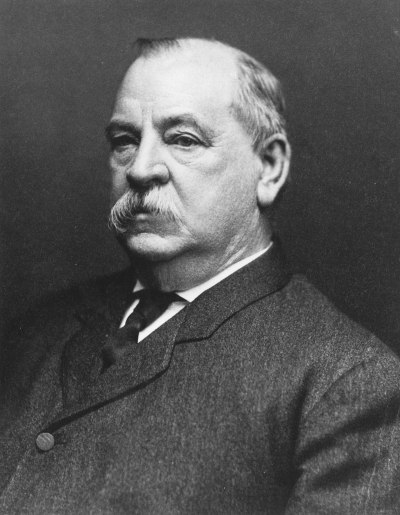
President Grover Cleveland, 22nd President of the United States of America, 1885-1889. Source: https://upload.wikimedia.org/wikipedia/commons/thumb/f/f3/Grover_Cleveland_-_NARA_-_518139_%28cropped%29.jpg/1280px-Grover_Cleveland_-_NARA_-_518139_%28cropped%29.jpg

Fellow-Citizens:

In the presence of this vast assemblage of my countrymen I am about to supplement and seal by the oath which I shall take the manifestation of the will of a great and free people. In the exercise of their power and right of self-government they have committed to one of their fellow-citizens a supreme and sacred trust, and he here consecrates himself to their service.

This impressive ceremony adds little to the solemn sense of responsibility with which I contemplate the duty I owe to all the people of the land. Nothing can relieve me from anxiety lest by any act of mine their interests may suffer, and nothing is needed to strengthen my resolution to engage every faculty and effort in the promotion of their welfare.

Amid the din of party strife the people’s choice was made, but its attendant circumstances have demonstrated anew the strength and safety of a government by the people. In each succeeding year it more clearly appears that our democratic principle needs no apology, and that in its fearless and faithful application is to be found the surest guaranty of good government.

But the best results in the operation of a government wherein every citizen has a share largely depend upon a proper limitation of purely partisan zeal and effort and a correct appreciation of the time when the heat of the partisan should be merged in the patriotism of the citizen.

To-day the executive branch of the Government is transferred to new keeping. But this is still the Government of all the people, and it should be none the less an object of their affectionate solicitude. At this hour the animosities of political strife, the bitterness of partisan defeat, and the exultation of partisan triumph should be supplanted by an ungrudging acquiescence in the popular will and a sober, conscientious concern for the general weal. Moreover, if from this hour we cheerfully and honestly abandon all sectional prejudice and distrust, and determine, with manly confidence in one another, to work out harmoniously the achievements of our national destiny, we shall deserve to realize all the benefits which our happy form of government can bestow.

On this auspicious occasion we may well renew the pledge of our devotion to the Constitution, which, launched by the founders of the Republic and consecrated by their prayers and patriotic devotion, has for almost a century borne the hopes and the aspirations of a great people through prosperity and peace and through the shock of foreign conflicts and the perils of domestic strife and vicissitudes.

By the Father of his Country our Constitution was commended for adoption as “the result of a spirit of amity and mutual concession.” In that same spirit it should be administered, in order to promote the lasting welfare of the country and to secure the full measure of its priceless benefits to us and to those who will succeed to the blessings of our national life. The large variety of diverse and competing interests subject to Federal control, persistently seeking the recognition of their claims, need give us no fear that “the greatest good to the greatest number” will fail to be accomplished if in the halls of national legislation that spirit of amity and mutual concession shall prevail in which the Constitution had its birth. If this involves the surrender or postponement of private interests and the abandonment of local advantages, compensation will be found in the assurance that the common interest is subserved and the general welfare advanced.

In the discharge of my official duty I shall endeavor to be guided by a just and unstrained construction of the Constitution, a careful observance of the distinction between the powers granted to the Federal Government and those reserved to the States or to the people, and by a cautious appreciation of those functions which by the Constitution and laws have been especially assigned to the executive branch of the Government.

But he who takes the oath today to preserve, protect, and defend the Constitution of the United States only assumes the solemn obligation which every patriotic citizen–on the farm, in the workshop, in the busy marts of trade, and everywhere–should share with him. The Constitution which prescribes his oath, my countrymen, is yours; the Government you have chosen him to administer for a time is yours; the suffrage which executes the will of freemen is yours; the laws and the entire scheme of our civil rule, from the town meeting to the State capitals and the national capital, is yours. Your every voter, as surely as your Chief Magistrate, under the same high sanction, though in a different sphere, exercises a public trust. Nor is this all. Every citizen owes to the country a vigilant watch and close scrutiny of its public servants and a fair and reasonable estimate of their fidelity and usefulness. Thus is the people’s will impressed upon the whole framework of our civil polity–municipal, State, and Federal; and this is the price of our liberty and the inspiration of our faith in the Republic.

It is the duty of those serving the people in public place to closely limit public expenditures to the actual needs of the Government economically administered, because this bounds the right of the Government to exact tribute from the earnings of labor or the property of the citizen, and because public extravagance begets extravagance among the people. We should never be ashamed of the simplicity and prudential economies which are best suited to the operation of a republican form of government and most compatible with the mission of the American people. Those who are selected for a limited time to manage public affairs are still of the people, and may do much by their example to encourage, consistently with the dignity of their official functions, that plain way of life which among their fellow-citizens aids integrity and promotes thrift and prosperity.

The genius of our institutions, the needs of our people in their home life, and the attention which is demanded for the settlement and development of the resources of our vast territory dictate the scrupulous avoidance of any departure from that foreign policy commended by the history, uhe traditions, and the prosperity of our Republic. It is the policy of independence, favored by our position and defended by our known love of justice and by our power. It is the policy of peace suitable to our interests. It is the policy of neutrality, rejecting any share in foreign broils and ambitions upon other continents and repelling their intrusion here. It is the policy of Monroe and of Washington and Jefferson–“Peace, commerce, and honest friendship with all nations; entangling alliance with none.”

A due regard for the interests and prosperity of all the people demands that our finances shall be established upon such a sound and sensible basis as shall secure the safety and confidence of business interests and make the wage of labor sure and steady, and that our system of revenue shall be so adjusted as to relieve the people of unnecessary taxation, having a due regard to the interests of capital invested and workingmen employed in American industries, and preventing the accumulation of a surplus in the Treasury to tempt extravagance and waste.

Care for the property of the nation and for the needs of future settlers requires that the public domain should be protected from purloining schemes and unlawful occupation.

The conscience of the people demands that the Indians within our boundaries shall be fairly and honestly treated as wards of the Government and their education and civilization promoted with a view to their ultimate citizenship, and that polygamy in the Territories, destructive of the family relation and offensive to the moral sense of the civilized world, shall be repressed.

The laws should be rigidly enforced which prohibit the immigration of a servile class to compete with American labor, with no intention of acquiring citizenship, and bringing with them and retaining habits and customs repugnant to our civilization.

The people demand reform in the administration of the Government and the application of business principles to public affairs. As a means to this end, civil-service reform should be in good faith enforced. Our citizens have the right to protection from the incompetency of public employees who hold their places solely as the reward of partisan service, and from the corrupting influence of those who promise and the vicious methods of those who expect such rewards; and those who worthily seek public employment have the right to insist that merit and competency shall be recognized instead of party subserviency or the surrender of honest political belief.

In the administration of a government pledged to do equal and exact justice to all men there should be no pretext for anxiety touching the protection of the freedmen in their rights or their security in the enjoyment of their privileges under the Constitution and its amendments. All discussion as to their fitness for the place accorded to them as American citizens is idle and unprofitable except as it suggests the necessity for their improvement. The fact that they are citizens entitles them to all the rights due to that relation and charges them with all its duties, obligations, and responsibilities.

These topics and the constant and ever-varying wants of an active and enterprising population may well receive the attention and the patriotic endeavor of all who make and execute the Federal law. Our duties are practical and call for industrious application, an intelligent perception of the claims of public office, and, above all, a firm determination, by united action, to secure to all the people of the land the full benefits of the best form of government ever vouchsafed to man. And let us not trust to human effort alone, but humbly acknowledging the power and goodness of Almighty God, who presides over the destiny of nations, and who has at all times been revealed in our country’s history, let us invoke His aid and His blessings upon our labors.

Grover Cleveland: “Inaugural Address,” March 4, 1885. Online by Gerhard Peters and John T. Woolley, The American Presidency Project. http://www.presidency.ucsb.edu/ws/?pid=25824.

President James A. Garfield’s Inaugural Address, march 4, 1881*

1280px-james_abram_garfield2c_photo_portrait_seated
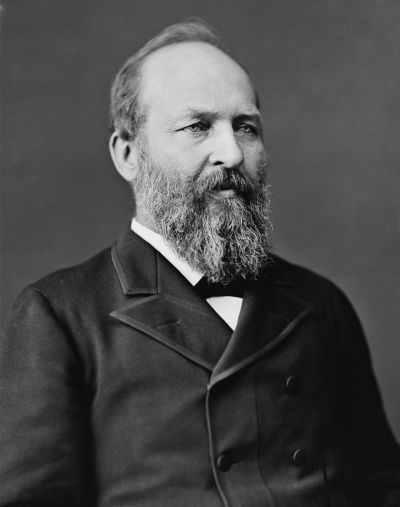
President James A. Garfield, 20th President of the United States of America, 1881. Source: https://upload.wikimedia.org/wikipedia/commons/thumb/1/1f/James_Abram_Garfield%2C_photo_portrait_seated.jpg/1280px-James_Abram_Garfield%2C_photo_portrait_seated.jpg

Fellow-Citizens:

We stand to-day upon an eminence which overlooks a hundred years of national life–a century crowded with perils, but crowned with the triumphs of liberty and law. Before continuing the onward march let us pause on this height for a moment to strengthen our faith and renew our hope by a glance at the pathway along which our people have traveled.

It is now three days more than a hundred years since the adoption of the first written constitution of the United States–the Articles of Confederation and Perpetual Union. The new Republic was then beset with danger on every hand. It had not conquered a place in the family of nations. The decisive battle of the war for independence, whose centennial anniversary will soon be gratefully celebrated at Yorktown, had not yet been fought. The colonists were struggling not only against the armies of a great nation, but against the settled opinions of mankind; for the world did not then believe that the supreme authority of government could be safely intrusted to the guardianship of the people themselves.

We can not overestimate the fervent love of liberty, the intelligent courage, and the sum of common sense with which our fathers made the great experiment of self-government. When they found, after a short trial, that the confederacy of States, was too weak to meet the necessities of a vigorous and expanding republic, they boldly set it aside, and in its stead established a National Union, founded directly upon the will of the people, endowed with full power of self-preservation and ample authority for the accomplishment of its great object.

Under this Constitution the boundaries of freedom have been enlarged, the foundations of order and peace have been strengthened, and the growth of our people in all the better elements of national life has indicated the wisdom of the founders and given new hope to their descendants. Under this Constitution our people long ago made themselves safe against danger from without and secured for their mariners and flag equality of rights on all the seas. Under this Constitution twenty-five States have been added to the Union, with constitutions and laws, framed and enforced by their own citizens, to secure the manifold blessings of local self-government.

The jurisdiction of this Constitution now covers an area fifty times greater than that of the original thirteen States and a population twenty times greater than that of 1780.

The supreme trial of the Constitution came at last under the tremendous pressure of civil war. We ourselves are witnesses that the Union emerged from the blood and fire of that conflict purified and made stronger for all the beneficent purposes of good government.

And now, at the close of this first century of growth, with the inspirations of its history in their hearts, our people have lately reviewed the condition of the nation, passed judgment upon the conduct and opinions of political parties, and have registered their will concerning the future administration of the Government. To interpret and to execute that will in accordance with the Constitution is the paramount duty of the Executive.

Even from this brief review it is manifest that the nation is resolutely facing to the front, resolved to employ its best energies in developing the great possibilities of the future. Sacredly preserving whatever has been gained to liberty and good government during the century, our people are determined to leave behind them all those bitter controversies concerning things which have been irrevocably settled, and the further discussion of which can only stir up strife and delay the onward march.

The supremacy of the nation and its laws should be no longer a subject of debate. That discussion, which for half a century threatened the existence of the Union, was closed at last in the high court of war by a decree from which there is no appeal–that the Constitution and the laws made in pursuance thereof are and shall continue to be the supreme law of the land, binding alike upon the States and the people. This decree does not disturb the autonomy of the States nor interfere with any of their necessary rights of local self-government, but it does fix and establish the permanent supremacy of the Union.

The will of the nation, speaking with the voice of battle and through the amended Constitution, has fulfilled the great promise of 1776 by proclaiming “liberty throughout the land to all the inhabitants thereof.”

The elevation of the negro race from slavery to the full rights of citizenship is the most important political change we have known since the adoption of the Constitution of 1787. NO thoughtful man can fail to appreciate its beneficent effect upon our institutions and people. It has freed us from the perpetual danger of war and dissolution. It has added immensely to the moral and industrial forces of our people. It has liberated the master as well as the slave from a relation which wronged and enfeebled both. It has surrendered to their own guardianship the manhood of more than 5,000,000 people, and has opened to each one of them a career of freedom and usefulness. It has given new inspiration to the power of self-help in both races by making labor more honorable to the one and more necessary to the other. The influence of this force will grow greater and bear richer fruit with the coming years.

No doubt this great change has caused serious disturbance to our Southern communities. This is to be deplored, though it was perhaps unavoidable. But those who resisted the change should remember that under our institutions there was no middle ground for the negro race between slavery and equal citizenship. There can be no permanent disfranchised peasantry in the United States. Freedom can never yield its fullness of blessings so long as the law or its administration places the smallest obstacle in the pathway of any virtuous citizen.

The emancipated race has already made remarkable progress. With unquestioning devotion to the Union, with a patience and gentleness not born of fear, they have “followed the light as God gave them to see the light.” They are rapidly laying the material foundations of self-support, widening their circle of intelligence, and beginning to enjoy the blessings that gather around the homes of the industrious poor. They deserve the generous encouragement of all good men. So far as my authority can lawfully extend they shall enjoy the full and equal protection of the Constitution and the laws.

The free enjoyment of equal suffrage is still in question, and a frank statement of the issue may aid its solution. It is alleged that in many communities negro citizens are practically denied the freedom of the ballot. In so far as the truth of this allegation is admitted, it is answered that in many places honest local government is impossible if the mass of uneducated negroes are allowed to vote. These are grave allegations. So far as the latter is true, it is the only palliation that can be offered for opposing the freedom of the ballot. Bad local government is certainly a great evil, which ought to be prevented; but to violate the freedom and sanctities of the suffrage is more than an evil. It is a crime which, if persisted in, will destroy the Government itself. Suicide is not a remedy. If in other lands it be high treason to compass the death of the king, it shall be counted no less a crime here to strangle our sovereign power and stifle its voice.

It has been said that unsettled questions have no pity for the repose of nations. It should be said with the utmost emphasis that this question of the suffrage will never give repose or safety to the States or to the nation until each, within its own jurisdiction, makes and keeps the ballot free and pure by the strong sanctions of the law.

But the danger which arises from ignorance in the voter can not be denied. It covers a field far wider than that of negro suffrage and the present condition of the race. It is a danger that lurks and hides in the sources and fountains of power in every state. We have no standard by which to measure the disaster that may be brought upon us by ignorance and vice in the citizens when joined to corruption and fraud in the suffrage.

The voters of the Union, who make and unmake constitutions, and upon whose will hang the destinies of our governments, can transmit their supreme authority to no successors save the coming generation of voters, who are the sole heirs of sovereign power. If that generation comes to its inheritance blinded by ignorance and corrupted by vice, the fall of the Republic will be certain and remediless.

The census has already sounded the alarm in the appalling figures which mark how dangerously high the tide of illiteracy has risen among our voters and their children.

To the South this question is of supreme importance. But the responsibility for the existence of slavery did not rest upon the South alone. The nation itself is responsible for the extension of the suffrage, and is under special obligations to aid in removing the illiteracy which it has added to the voting population. For the North and South alike there is but one remedy. All the constitutional power of the nation and of the States and all the volunteer forces of the people should be surrendered to meet this danger by the savory influence of universal education.

It is the high privilege and sacred duty of those now living to educate their successors and fit them, by intelligence and virtue, for the inheritance which awaits them.

In this beneficent work sections and races should be forgotten and partisanship should be unknown. Let our people find a new meaning in the divine oracle which declares that “a little child shall lead them,” for our own little children will soon control the destinies of the Republic.

My countrymen, we do not now differ in our judgment concerning the controversies of past generations, and fifty years hence our children will not be divided in their opinions concerning our controversies. They will surely bless their fathers and their fathers’ God that the Union was preserved, that slavery was overthrown, and that both races were made equal before the law. We may hasten or we may retard, but we can not prevent, the final reconciliation. Is it not possible for us now to make a truce with time by anticipating and accepting its inevitable verdict?

Enterprises of the highest importance to our moral and material well-being unite us and offer ample employment of our best powers. Let all our people, leaving behind them the battlefields of dead issues, move forward and in their strength of liberty and the restored Union win the grander victories of peace.

The prosperity which now prevails is without parallel in our history. Fruitful seasons have done much to secure it, but they have not done all. The preservation of the public credit and the resumption of specie payments, so successfully attained by the Administration of my predecessors, have enabled our people to secure the blessings which the seasons brought.

By the experience of commercial nations in all ages it has been found that gold and silver afford the only safe foundation for a monetary system. Confusion has recently been created by variations in the relative value of the two metals, but I confidently believe that arrangements can be made between the leading commercial nations which will secure the general use of both metals. Congress should provide that the compulsory coinage of silver now required by law may not disturb our monetary system by driving either metal out of circulation. If possible, such an adjustment should be made that the purchasing power of every coined dollar will be exactly equal to its debt-paying power in all the markets of the world.

The chief duty of the National Government in connection with the currency of the country is to coin money and declare its value. Grave doubts have been entertained whether Congress is authorized by the Constitution to make any form of paper money legal tender. The present issue of United States notes has been sustained by the necessities of war; but such paper should depend for its value and currency upon its convenience in use and its prompt redemption in coin at the will of the holder, and not upon its compulsory circulation. These notes are not money, but promises to pay money. If the holders demand it, the promise should be kept.

The refunding of the national debt at a lower rate of interest should be accomplished without compelling the withdrawal of the national-bank notes, and thus disturbing the business of the country.

I venture to refer to the position I have occupied on financial questions during a long service in Congress, and to say that time and experience have strengthened the opinions I have so often expressed on these subjects.

The finances of the Government shall suffer no detriment which it may be possible for my Administration to prevent.

The interests of agriculture deserve more attention from the Government than they have yet received. The farms of the United States afford homes and employment for more than one-half our people, and furnish much the largest part of all our exports. As the Government lights our coasts for the protection of mariners and the benefit of commerce, so it should give to the tillers of the soil the best lights of practical science and experience.

Our manufacturers are rapidly making us industrially independent, and are opening to capital and labor new and profitable fields of employment. Their steady and healthy growth should still be matured. Our facilities for transportation should be promoted by the continued improvement of our harbors and great interior waterways and by the increase of our tonnage on the ocean.

The development of the world’s commerce has led to an urgent demand for shortening the great sea voyage around Cape Horn by constructing ship canals or railways across the isthmus which unites the continents. Various plans to this end have been suggested and will need consideration, but none of them has been sufficiently matured to warrant the United States in extending pecuniary aid. The subject, however, is one which will immediately engage the attention of the Government with a view to a thorough protection to American interests. We will urge no narrow policy nor seek peculiar or exclusive privileges in any commercial route; but, in the language of my predecessor, I believe it to be the right “and duty of the United States to assert and maintain such supervision and authority over any interoceanic canal across the isthmus that connects North and South America as will protect our national interest.”

The Constitution guarantees absolute religious freedom. Congress is prohibited from making any law respecting an establishment of religion or prohibiting the free exercise thereof. The Territories of the United States are subject to the direct legislative authority of Congress, and hence the General Government is responsible for any violation of the Constitution in any of them. It is therefore a reproach to the Government that in the most populous of the Territories the constitutional guaranty is not enjoyed by the people and the authority of Congress is set at naught. The Mormon Church not only offends the moral sense of manhood by sanctioning polygamy, but prevents the administration of justice through ordinary instrumentalities of law.

In my judgment it is the duty of Congress, while respecting to the uttermost the conscientious convictions and religious scruples of every citizen, to prohibit within its jurisdiction all criminal practices, especially of that class which destroy the family relations and endanger social order. Nor can any ecclesiastical organization be safely permitted to usurp in the smallest degree the functions and powers of the National Government.

The civil service can never be placed on a satisfactory basis until it is regulated by law. For the good of the service itself, for the protection of those who are intrusted with the appointing power against the waste of time and obstruction to the public business caused by the inordinate pressure for place, and for the protection of incumbents against intrigue and wrong, I shall at the proper time ask Congress to fix the tenure of the minor offices of the several Executive Departments and prescribe the grounds upon which removals shall be made during the terms for which incumbents have been appointed.

Finally, acting always within the authority and limitations of the Constitution, invading neither the rights of the States nor the reserved rights of the people, it will be the purpose of my Administration to maintain the authority of the nation in all places within its jurisdiction; to enforce obedience to all the laws of the Union in the interests of the people; to demand rigid economy in all the expenditures of the Government, and to require the honest and faithful service of all executive officers, remembering that the offices were created, not for the benefit of incumbents or their supporters, but for the service of the Government.

And now, fellow-citizens, I am about to assume the great trust which you have committed to my hands. I appeal to you for that earnest and thoughtful support which makes this Government in fact, as it is in law, a government of the people.

I shall greatly rely upon the wisdom and patriotism of Congress and of those who may share with me the responsibilities and duties of administration, and, above all, upon our efforts to promote the welfare of this great people and their Government I reverently invoke the support and blessings of Almighty God.

James A. Garfield: “Inaugural Address,” March 4, 1881. Online by Gerhard Peters and John T. Woolley, The American Presidency Project. http://www.presidency.ucsb.edu/ws/?pid=25823.