A Culture of Death

article_5939b90d00c7f
Source:https://s3.amazonaws.com/first-things-resources/uploads/article_5939b90d00c7f.jpg

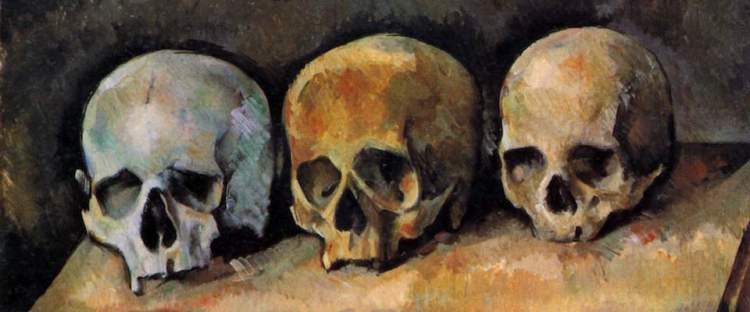
The United States–I believe–is no longer at the crossroads of whether or not we will be a society that holds to a culture of life. Rather, over the last 120 years or so, we have become a society that holds to a culture of death. It is something that happened gradually. It should come as no surprise to us at this juncture that this culture of death exists. When you consider where we have been and who we are as a Nation, you cannot help but look to history to see why we are where we are. Roe v. Wade didn’t happen overnight. It was a long time coming and once you allow abortion, it stands to reason that infanticide, and then euthanasia are quick to follow. But where did this culture of death begin?

I believe it began with the idea of eugenics. This is the study or belief in the possibility of improving the qualities of the human species or a human population, especially by such means as discouraging reproduction by persons having genetic defects or presumed to have inheritable undesirable traits or encouraging reproduction by persons presumed to have inheritable desirable traits. The problem is that this is very subjective. In Frederick Osborn’s 1937 journal article Development of a Eugenic Philosophy, he framed this as a social philosophy. In other words, this was to bring social order. If those whose genes are of positive traits–such as leadership qualities in the family line, good health, good cognitive skills, etc.–then these families should propagate their family lines. They should be having more and more babies because the society as a whole would be better for it.

Now for the negative traits, the people whose traits may not be desirable–such as those who have downs syndrome, or those of lower cognitive skills, or those whose lineage is not sophisticated or are from poverty-stricken families, etc.–these should be eliminated. The way to limit the reproduction of these less desirables are to create and exercise sterilization laws which took place here in the United States of America in early 1920s. It was advocated by the International Federation of Eugenics Organizations, the Kaiser Wilhelm Institute of Anthropology, Human Heredity, and Eugenics, the Cold Spring Harbour Carnegie Institution for Experimental Evolution, and the Eugenics Record Office.

The moral dimension of those who held to these philosophies of eugenics rejected the doctrine that all human beings are born equal and redefined moral worth purely in terms of genetic fitness. Concerning its racist elements, these included the pursuit of pure Nordic race or Aryan genetic pools and the eventual elimination of unfit races. Of course, there were those who stood against such an idea as American sociologist Lester Frank Ward, the English writer G.K. Chesterton, the German-American anthropologist Franz Boas. Boas argued that advocates of eugenics greatly overestimated the influence of biology. Boas harshly criticized eugenics in his 1916 article published in The Scientific Monthly entitled Eugenics. Chesterton wrote in 1917 his book entitled Eugenics and Other Evils. All of these wrote extensive articles and books speaking against this moral evil.

And why would I call this a moral evil? The scientific reputation of eugenics started to decline in the 1930s, except in one country who had a son by the name of Ernst Rudin, He wrote about eugenics as a justification for the racial policies of Nazi Germany. Through his writings, the dictator Adolf Hitler praised the ideology of eugenics in his book Mein Kampf in 1925 and emulated eugenic legislation for the sterilization of defectives that had been pioneered in the United States once he took power. Did you just read that last sentence? These ideas were pioneered in the United States. Early in Hitler’s regime, those who were identified as defectives included the poor, mentally ill, blind, deaf, developmentally disabled, promiscuous women, homosexuals, and racial groups–mainly the Jews who lived in Nazi Germany, Poland, and anywhere else he could dispose of them. And this he did with a vengeance! Over six million Jews perished at the hands of Nazi Germany under Hitler’s dictatorial regime. Under Hitler, the eugenics policies ended with the Final Solution to rid the world of all Jews if at all possible. Thus, the Nazi practice of euthanasia was carried out in hospitals, concentration camps, on roads and city streets, wherever and whenever Nazis thought it was alright to kill: for this was the final solution to what Hitler deemed as the scourge of the ages–Jews.

Has eugenics gone away for good? No, not really. There is a renewed interest in eugenics as developments in the genetic, genomic, and reproductive technologies have advanced at the end of the 20th century. Today, modern genetics is believed by many to be a backdoor to eugenics. This view is shared by former White House Assistant Director for Forensic Sciences, Tania Simoncelli, who stated in a 2003 publication by the Population and Development Program at Hampshire College that advances in preimplantation genetic diagnosis are moving society to a “new era of eugenics”, and that, unlike the Nazi eugenics, modern eugenics is consumer driven and market based “where children are increasingly regarded as made-to-order consumer products.” Richard Dawkins, the famed atheist said that the discussion regarding eugenics was inhibited by the shadow of Nazi misuse, to the extent that some scientists would not admit that breeding humans for certain abilities is at all possible. Dawkins believes that it is not physically different from breeding domestic animals for traits such as speed or herding skills.

In essence, those who are advocating for a renewed presence of eugenics in society–whether they are publicly advocating for it or not publicly advocating but in secret–are using different terms than the term eugenics. They would rather use terms such s human genetic engineering or germinal choice or reprogenetics. They change the verbiage so as to hide what they really mean and so they will not be associated with the early 20th century eugenic movements.

Whatever you call it is not the issue. The issue is that someone–as subjective as they are and can be and will be–will decide who is worthy of being reproduced and who will not be. What is the dilemma? The dilemma is who will that person or persons or group or groups be? And who will give them the authority to practice human genetic engineering or eugenics? The answer to this is still unclear, but more and more of this human genetic engineering is happening right now where we live through the chemicals that are used to purify water, the medications that people take on a daily basis, and through the chemicals in foods that we eat. Make no mistake, those with weaker constitutions will be weeded out while those with better constitutions will lead the way. Modern eugenics is happening everyday…right under our noses.

A Lonely Place

depression-man-fog-beach
Source:http://media.beliefnet.com/~/media/photos-with-attribution/Depression-Sad/depression-man-fog-beach.jpg?as=1&w=400

Have you ever felt lonely? Have you ever just felt like you were all alone in this big world of ours? There are times that loneliness creeps into all of our lives. It is during that time of grief that one feels lonely or that time after an argument with those closest to you that loneliness sets in. It can happen right in the middle of a movie or concert that you realize that you are by yourself and no one really even notices that you are there. Loneliness can hit a person during a family reunion or a school reunion and at times you just stand there with the feelings of lostness.

The Bible gives us reasons why mankind has these bouts of loneliness. For instance, our own sin tends to isolate us. Psalm 81:11-12 says:

But My people did not listen to My voice, and Israel did not obey Me. So I gave them over to the stubbornness of their heart, to walk in their own devices.

Paul the apostle says in Ephesians 4:17-19:

So this I say, and affirm together with the Lord, that you walk no longer just as the Gentiles also walk, in the futility of their mind, being darkened in their understanding, excluded from the life of God because of the ignorance that is in them, because of the hardness of their heart; and they, having become callous, have given themselves over to sensuality for the practice of every kind of impurity with greediness.

Just in these two short passages of Scripture, we can see how sin causes loneliness in our lives. Granted, that feeling of loneliness comes from being apart from God because of our sin. When we refuse to let Him lead us and we become stubborn against Him, then we will simply walk in our own devices because of the hardness of our hearts toward Him.

Another reason for loneliness can be because of the remorse that we feel for our sin. Peter the apostle was lonely after betraying Jesus Christ three times and hearing the rooster crow just as Jesus said. Matthew 26:75 says:

And Peter remembered the word which Jesus had said, “Before a rooster crows, you will deny Me three times.” And he went out and wept bitterly.

Think of the loneliness that Judas Iscariot felt after betraying Jesus Christ because of the stubbornness of his heart. Matthew 27:4-5 says:

“I have sinned by betraying innocent blood.” But they said, “What is that to us? See to that yourself!” And he threw the pieces of silver into the temple sanctuary and departed; and he went away and hanged himself.

Remorse for our sin can cause us to feel lonely, and this is very different from merely feeling guilty or shamed by what we have done. Remorse means that we have a gnawing distress arising inside of us from a sense of what we have done; it is from the Latin remordere which means to bite again. Very different from just mere guilt or shame.

Loneliness comes from a lack of friends. Psalm 142:4 says:

Look to the right and see; for there is no one who regards me; there is no escape for me; no one cares for my soul.

My best friend has told me something that his grandfather told him many years ago. He said, “If a man goes to his grave having had at least one best friend, then he is highly blessed and favored.” The psalmist here was speaking of a deep lack of friendship and how his feelings of loneliness played havoc with his soul. Loneliness takes a toll on a person. Paul the apostle even felt this way in 2 Timothy 4:16:

At my first defense no one supported me; may it not be counted against them.

At the most needed time for defense and support, no one was there to help Paul the apostle. Rather, his friends deserted him and no one from his family was there to rescue him. He was deserted.

Loss of identity also brings loneliness. People identify you as this or as that. With these identities, whether true or not, people will shun you. Consider Luke 8:27 which says:

And when Jesus came out onto the land, He was met by a man from the city who was possessed with demons; and who had not put on any clothing for a long time, and was not living in a house, but in the tombs.

This man had been alone in the tombs for years being possessed by a large group of demons. Due to this possession, he was prone to attack those who came by him in addition to hurting him physically, emotionally, and, obviously, spiritually. No one could come close to him. And even though they tried to bind him, the chains which they used were no match for the demons that possessed him. He was no longer identified as a man, but as an animal among the tombs.

When a person is discontent with their station in life, loneliness may also set in causing bitterness and dissatisfaction. Take for instance Ecclesiastes 4:8:

There was a certain man without a dependent, having neither a son nor a brother, yet there was no end to all his labor. Indeed, his eyes were not satisfied with riches and he never asked, “And for whom am I laboring and depriving myself of pleasure?” This too is vanity and it is a grievous task.

In other words, because he was lonely, not having anyone to come to his side, everything for which he was working was useless in his mind. It reminds me of George Eastman who ended his life in his 70’s because he set out to do what he did and had nothing more after his last invention. Discontent, dissatisfaction with what you do and the reason you do it, may be the cause for loneliness.

Disease can cause loneliness. The Bible records in Leviticus 13:4:

But if the bright spot is white on the skin of his body, and it doe snot appear to be deeper than the skin, and the hair on it has not turned white, then the priest shall isolate him who has the infection for seven days.

This was a case of leprosy and during the days of the Bible all who were affected with leprosy were forbidden to mix with those not affected. Illness, whatever type it may be, causes loneliness when others fear contracting the disease of the other or if they do not know what to say to the diseased. Many times, people will simply leave the diseased alone thinking that is the best thing for them, whether they can see the disease or not.

Another example of disease is that of mental illness. Depression, usually marked especially by sadness, inactivity, difficulty in thinking and concentration, a significant increase or decrease in appetite and time spend sleeping, feelings of dejection and hopelessness, and sometimes suicidal tendencies lead to loneliness. People do not understand many times when and why some are depressed or deal with mental illness. If they had a broken arm or a cold or pneumonia they could understand the illness so much better; but when it comes to the mind that cannot be seen, nor can it be understood at times, people tend to flee from others. Psalm 43:5 says:

Why are you in despair, O my soul? And why are you disturbed within me?

Again, the psalmist writes in 73:16-17:

When I pondered to understand this, it was troublesome in my sight until I came into the sanctuary of God; then I perceived their end.

Micah the prophet even felt depressed and alone when he writes in Micah 7:1-2:

Woe is me! For I am like the fruit pickers, like the grape gatherers. There is not a cluster of grapes to eat, or a first-ripe fig which I crave. The godly person has perished from the land, and there is no upright person among men. All of them lie in wait for bloodshed; each of them hunts the other with a net.

So how can we handle loneliness? To whom shall we go when we have thoughts and feelings of loneliness? Jesus Christ experienced loneliness and we can learn how to properly handle it by looking to Him for the answer. Consider the following verses that speak of the loneliness that Jesus Christ felt, both Old and New Testaments testify to this:

“My God, my God, why have You forsaken me? Far from my deliverance are the words of my groaning. O my God, I cry by day, but You do not answer; and by night, but I have no rest.” (Psalm 22:1-2)

Many scholars believe that Jesus Christ quoted the entirety of Psalm 22. The chilling words of Jesus Christ upon the Cross when He says, “Eli, Eli, lama sabachthani?” which is translated, “My God, My God, why have You forsaken Me?” show us the despair and loneliness of Jesus Christ upon the Cross.

Matthew 4:1-2 shows us a picture of Jesus Christ in His loneliness while being tempted by the devil in the wilderness:

Then Jesus was led up by the Spirit into the wilderness to be tempted by the devil. And after He had fasted forty days and forty night, He then became hungry.

He was on a mission and He was lonely. He was there to be tempted by the devil and He succeeded in not sinning against His Heavenly Father. Rather, He walked in obedience to His Father during this time. This shows us that we, too, may be lonely, but we can walk in humility and obedience to God in the power of the Holy Spirit.

Another example of Jesus Christ being lonely is when He sent His disciples on their way and He went up a mountain to spend time in prayer. Matthew 14:22-23 says:

Immediately He made the disciples get into the boat and go ahead of Him to the other side, while He sent the crowds away. After He had sent the crowds away, He went up on the mountain by Himself to pray; and when it was evening, He was there alone.

This is a picture of being alone with God. Jesus Christ spent this time in communication with His Heavenly Father. He was communing with Him–alone. It can be good for us to be alone at times to spend in prayer, ever seeking God’s will and ever listening to the small still voice of God.

So there are positive aspects to loneliness. We have seen at least two different examples from Jesus Christ. Loneliness, when one’s perspective is that of Christ, can be positive as one may exercise his opportunity for communion with God. Jesus Christ even said in Matthew 6:6:

“But you, when you pray, go into your inner room, close your door and pray to your Father who is in secret, and your Father who sees what is done in secret will reward you.”

Jesus Christ even encouraged His disciples to go to a secluded place to be alone to rest in Mark 6:31-32:

And Jesus said to them, “Come away by yourselves to a secluded place and rest a while.” (For there were many people coming and going, and they did not even have time to eat.) They went away in the boat to a secluded place by themselves.

Loneliness, therefore, may not necessarily be a bad thing. It may be that we just need to have a better perspective on our times of loneliness. It could be that God is simply trying to get our attention since our attention so often times is stolen by the cares of this world. God may be trying to help us to slow down and to rest. He may even be trying to get us to turn to Him in our times of distress, disease, and depression. Whatever the case, loneliness hurts, but it does not have to hurt. We can rest assured that Hebrews 13:5-8 is for us today:

Make sure that your character is free from the love of money, being content with what you have; for He Himself has said, “I will never desert you, nor will I ever forsake you,” so that we confidently say, “The LORD is my helper, I will not be afraid. What will man do to me?” Remember those who led you, who spoke the word of God to you; and considering the result of their conduct, imitate their faith. Jesus Christ is the same yesterday and today and forever.


plexus-slim-1
For information on Plexus products, click here!


Insights on Fatherhood…as of late

Here I am…a father of five years…learning how to be a dad. I’ve made some right decisions and some bad decisions. I’ve made some easy decisions and some hard decisions. All-in-all, if there’s one thing that I’ve learned, I now know why parents are so tired all the time!

Just kidding! I’m learning a lot about fatherhood. Just a few things I’d like to mention in this post are:

  1. Fatherhood takes a lot of work. I need to do my best all of the time. There is no relaxing when it comes to being a dad. My two sons have a needs. They need me to be on my game all the time (not my Gameboy, or my PS2, or my Wii, or my Xbox, or whatever game!!). They need me to be their dad all of the time, not just when I “feel” like it.
  2. Fatherhood takes a lot of time. I need to give my time all of the time. I have always wanted to control my time the way I wanted. If I wanted to take the time to nap, then I took a nap. If I wanted to watch TV, then I watched TV. If I wanted to go out and do whatever, I did whatever. I’m discovering that my two sons want me to spend time with them…paying attention to them…giving them my time. (I’m still working on this one because I’m still selfish when it comes to my time, but I’m starting to get the message on this one.)
  3. Fatherhood takes a lot of love. I need to show my love all of the time. This is hard sometimes when I expect my two sons to already know everything that I do. After all, they should know it all, right? Wrong! They’re boys and they’re still growing up. I’m supposed to be teaching them and they are looking to me to teach them how to be men and if I don’t love them enough to teach them, the world is willing to teach them everything that it loves–and the things the world loves is not a pretty thing. I need to love my two sons enough to teach them in the way they should go: the way of righteousness, holiness, love, nobility, peace, courage, boldness, strength, honor, and integrity.
  4. Fatherhood takes a lot of patience. I need to give my patience all of the time. I lack patience most of the time. I have to be honest on this one. I lack patience. Sheesh! That’s hard to admit, but it’s true. Even when I pray for patience (and that’s not often!), I still struggle with it, but I need to show my two sons patience. They are boys who need a father who lovingly shows patience as they are finding their way in this life with me patiently helping them to see the Light of the world.
  5. Fatherhood takes righteousness. I need to be a righteous father. In all my dealings, I need to seek to be righteous in all that I do. Whether it be in speech or in deed, I need to be right according to a right and moral standard. The only right and moral standard that I know is the Lord Jesus Christ and His Word, the Bible. Therefore, I need to read it and study it and live by it to the best of my ability. My two sons need to see me living a life of righteousness to the best of my ability.
  6. Fatherhood takes responsibility. I need to live a life of responsibility. I need to make sure that my bills are paid on time. I need to show them how to show up on early to church, to work, to events so my two sons know that it is important to be responsible in every area of life. They need to know how important it is to know how to carry and shoot a firearm and that they are used for hunting and for protection of oneself, never to kill or to maim another human. They need to know that it’s my responsibility to teach them the Word of God and to live out my Christianity before them by teaching them verbally and by showing them that I live according to what I believe.

These are just a few things that I’ve been learning over these last five years. I still have so much more to learn. What would you add to this list?

plexus-slim-1
www.shopmyplexus.com/cherylgorena